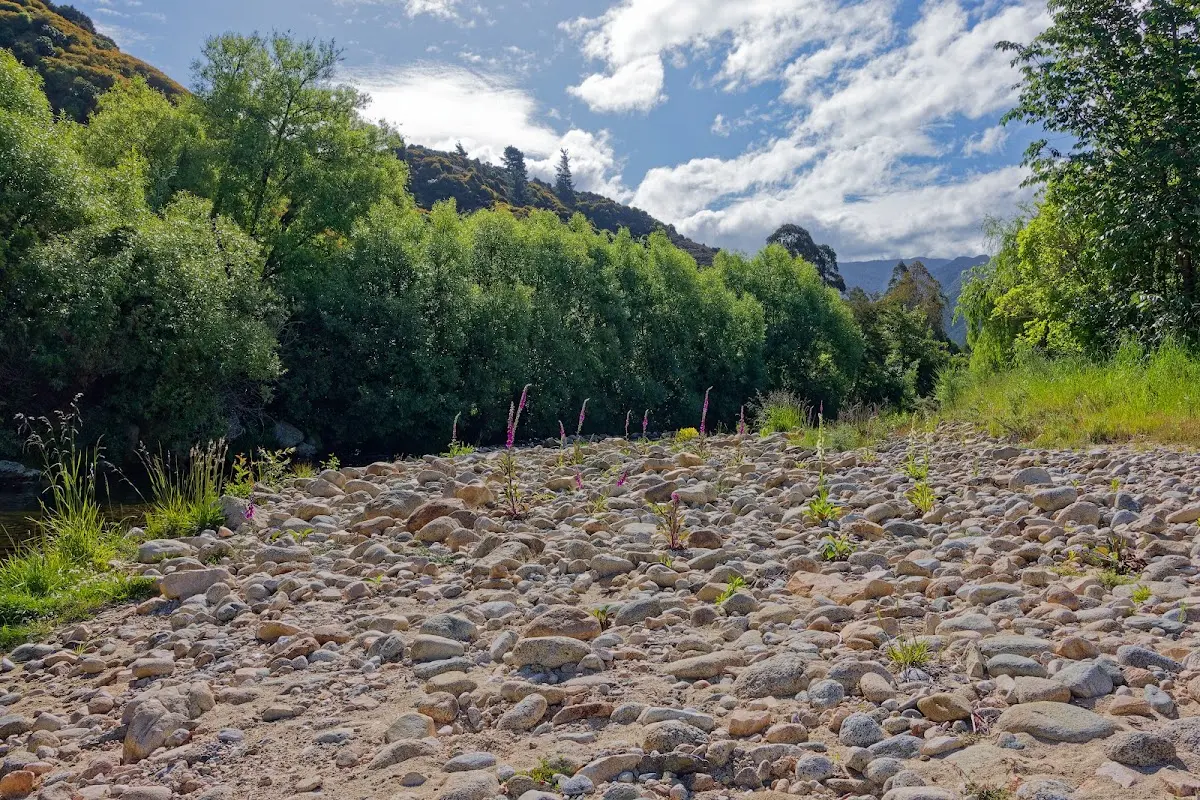
Biking and Hiking New Zealand - Nelson, Golden Bay
Rain again the next morning, unfortunately, but sunshine later in the afternoon in Nelson and Richmond. In Motueka I booked a campsite in Abel Tasman National Park and a water taxi back to Mārahau. It didn't take much guessing that the girl who arranged that for me was from Austria — she had already lived in New Zealand for six years — and I was able to pinpoint her to Tyrol (bischd a Tiroler, bischd a Mensch...), to the other ones, Pākehā from NZ or tourists, the conversation that followed was in te reo...
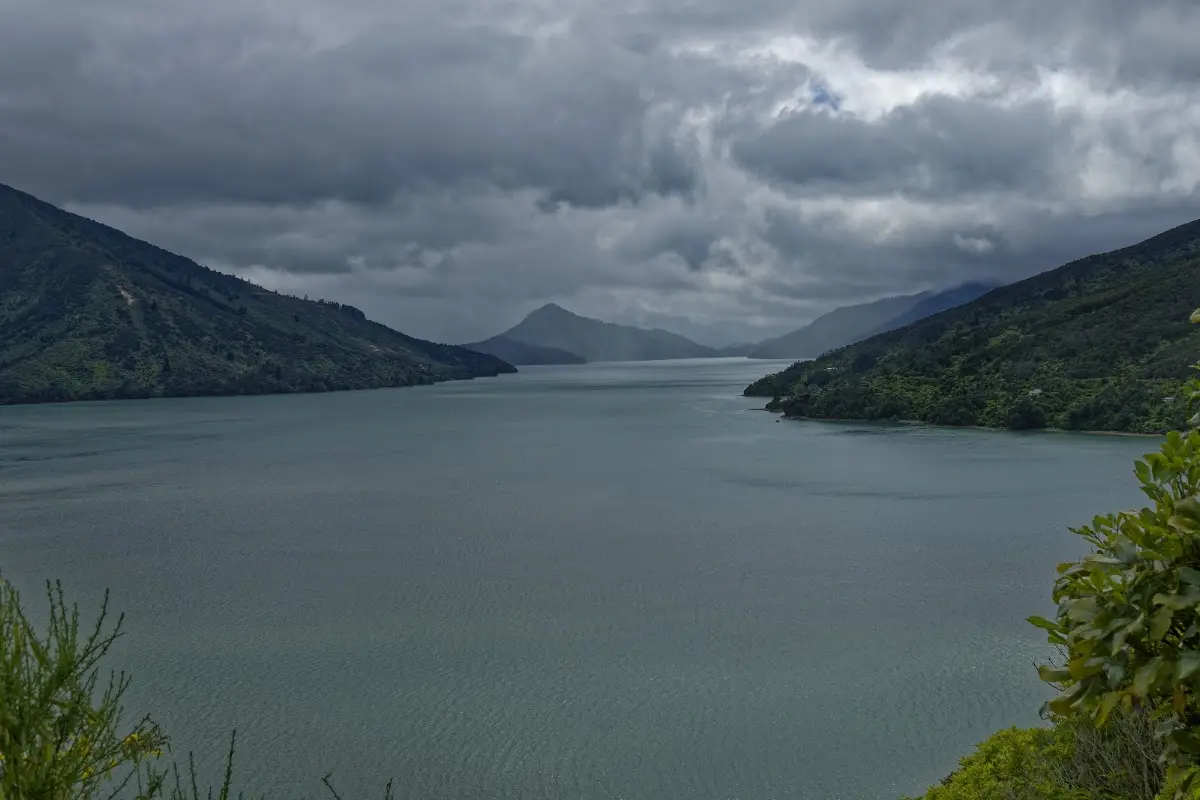
Queen Charlotte Drive out of Picton, before the rain properly set in.
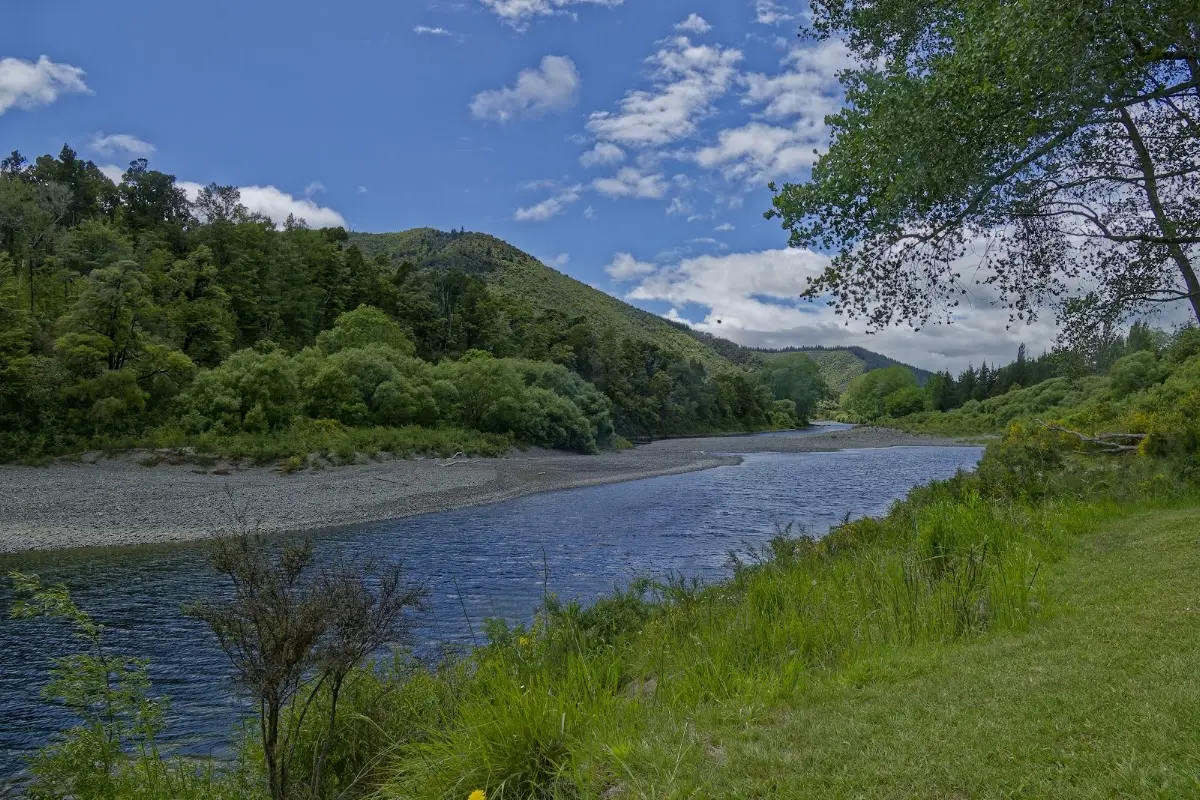
Nelson
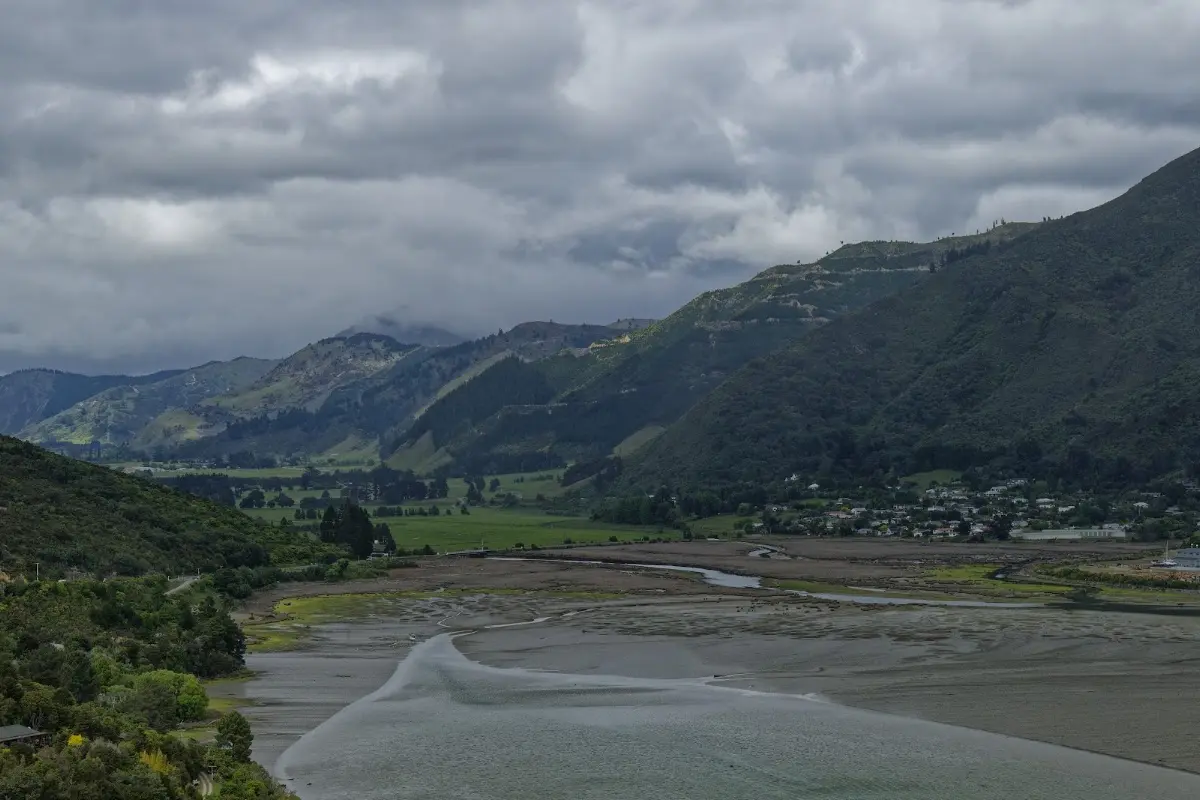
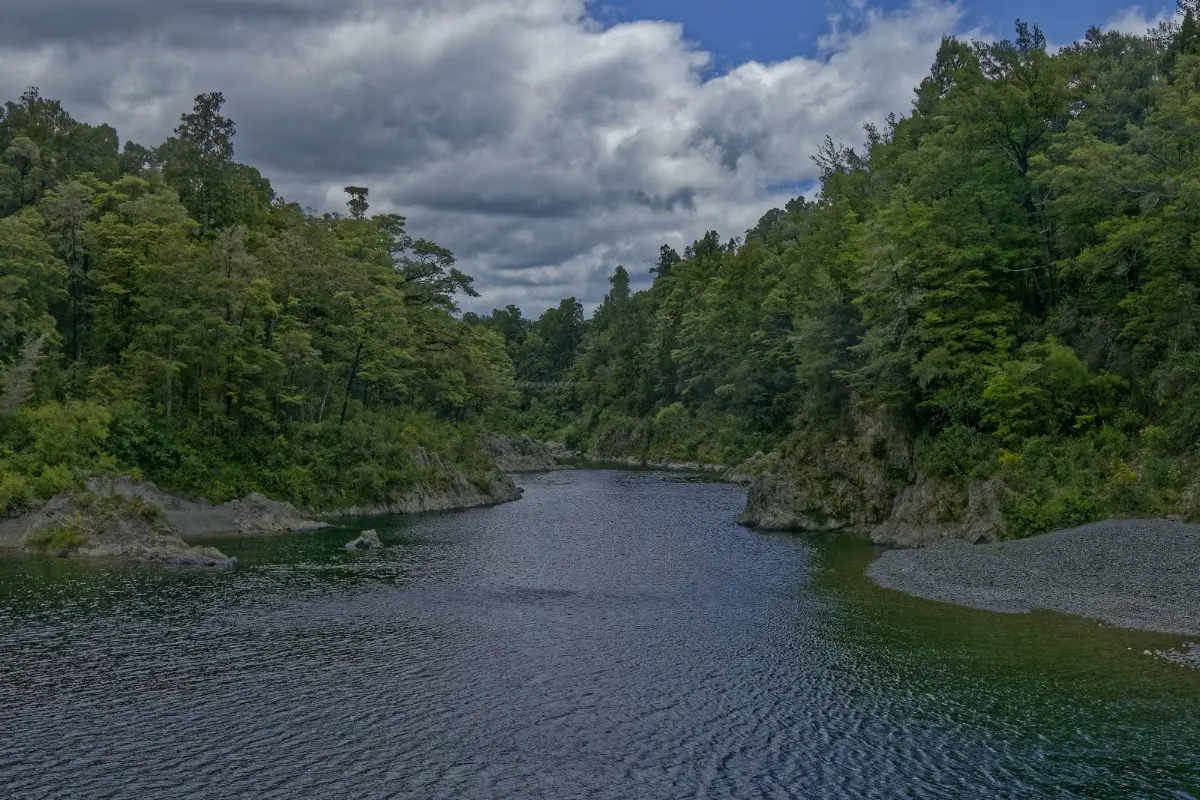
Nelson, known in Māori as Whakatū, is a city and unitary authority on the eastern shores of Tasman Bay at the top of New Zealand's South Island. Established in 1841 and chartered as a city in 1858, it is the oldest city in the South Island and the second-oldest in the country, and the only consolidated city-region in New Zealand.
The city is bordered by the Tasman District to the west and south-west and the Marlborough District to the north-east, east, and south-east. With a population of 51,300, Nelson ranks as New Zealand's 15th most populous urban area, and is known for its vibrant arts and crafts scene, including the Nelson Arts Festival.
Nelson was named for Admiral Horatio Nelson, victor of Trafalgar in 1805 — many streets and public spaces still carry battle-related names. The Māori name Whakatū means "construct" or "establish." Thanks to its exceptional sunshine hours, the city is often called "Sunny Nelson" or "Top of the South."
Settlement here began around 700 years ago with Māori iwi including Ngāti Hāwea, Ngāti Wairangi, Waitaha, and Kāti Māmoe. Ngāti Tūmatakōkiri arrived in the early 1600s, and in the 1820s raids led by Te Rauparaha displaced the earlier population; today eight tribes are recognised in the region.
Historic sites include Broadgreen Historic House (1855, now a museum), Isel House, once home to the Marsden family, and Founders Heritage Park, an interactive recreation of the city's history.
Beyond its history, Nelson is the gateway to Abel Tasman National Park and, with its abundant sunshine, has become a centre for vineyards, orchards, and fine produce.
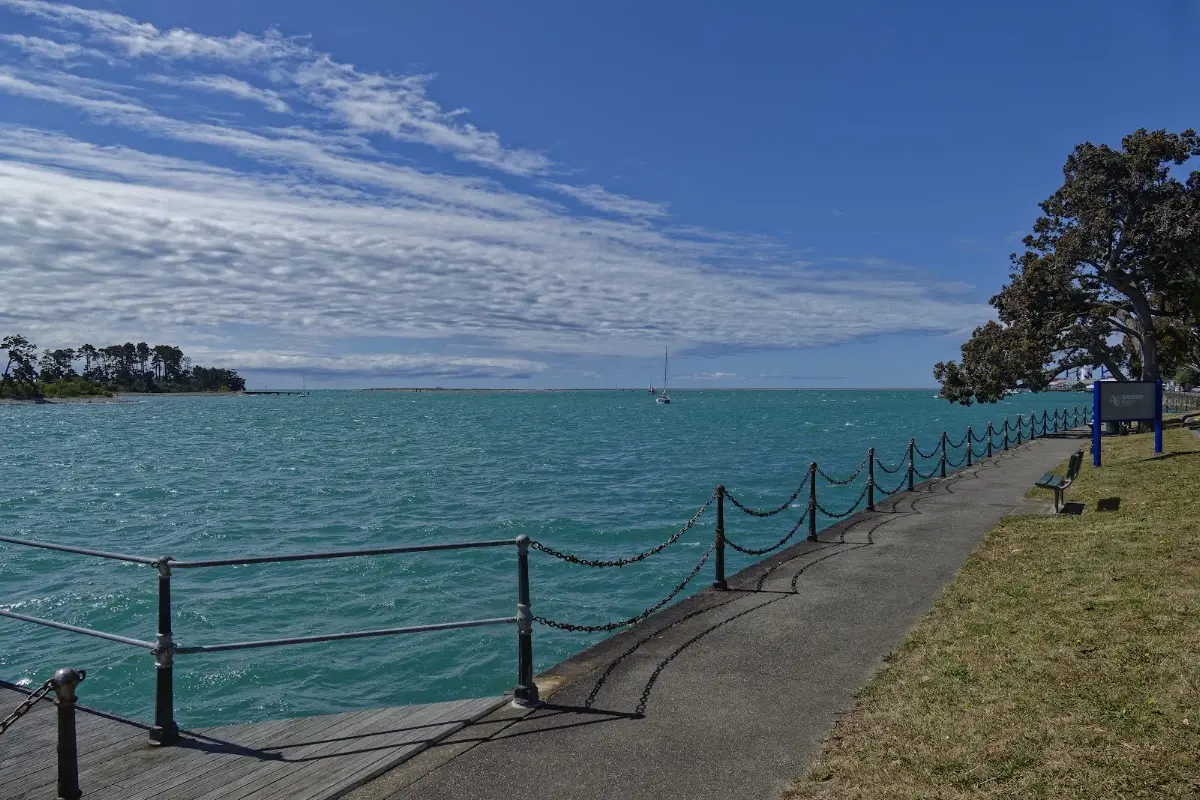
By afternoon the clouds had burned off completely — Nelson's waterfront in full sun.
Quite a few Germans settled in the nearby area of Upper Moutere in the 1840s. With more bad weather ahead, I decided to ride to Farewell Spit via the 800-metre Takaka Hill — another dead end, unfortunately. Nearby are Te Waikoropupū Springs, where about 11,000 litres of reputedly some of the clearest water in the world surge up every second. The average age of that water is said to be around ten years.
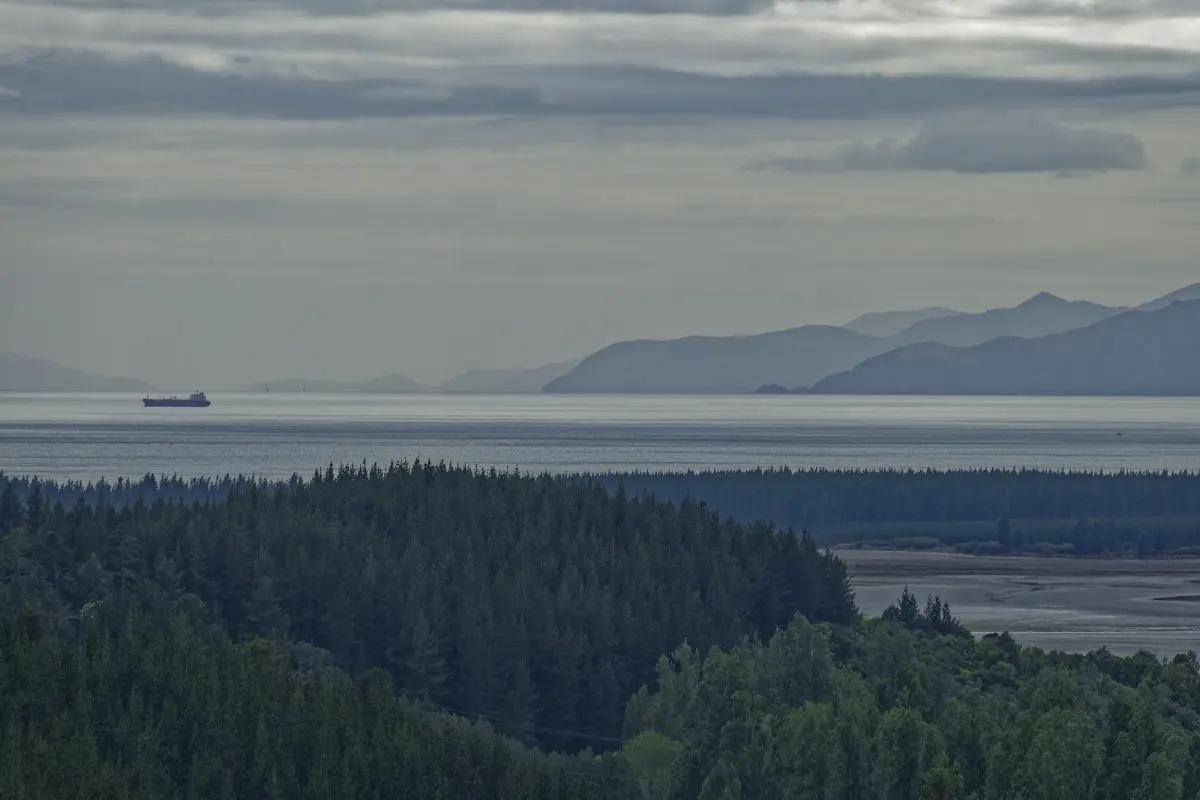
Rain moving back in over Tasman Bay by morning, a lone ship waiting it out.
Upper Moutere
Upper Moutere, originally named Sarau by its German settlers, lies in the Tasman District near Motueka at the top of New Zealand's South Island. The New Zealand Company had sought German emigrants as early as 1839, appointing an agent in Bremen; though a plan to sell the Chatham Islands to a German colonisation society fell through, German settlers arriving in Nelson were still granted British subject status.
In 1843, 140 German immigrants — mostly Lutheran Protestants with some Bavarian Catholics — arrived on the ship St Pauli, founding the villages of Sarau (now Upper Moutere) and Neudorf. The 176-day voyage saw four children die, seven couples marry, one baby born, and two passengers desert at a harbour stop.
Early prosperity was short-lived: land and capital shortages brought on a period of depression, immigration stalled until the 1850s, and by 1846 a quarter of the immigrants had already left Nelson.
Charles Kelling led a second wave of German immigrants on the ship Skjold in 1844. After founding the village of Ranzau with his brother, he moved to Sarau, became a community leader, and later served on the Nelson Provincial Council.
Sarau was renamed Upper Moutere during World War I, when anti-German sentiment made the old name unwelcome.
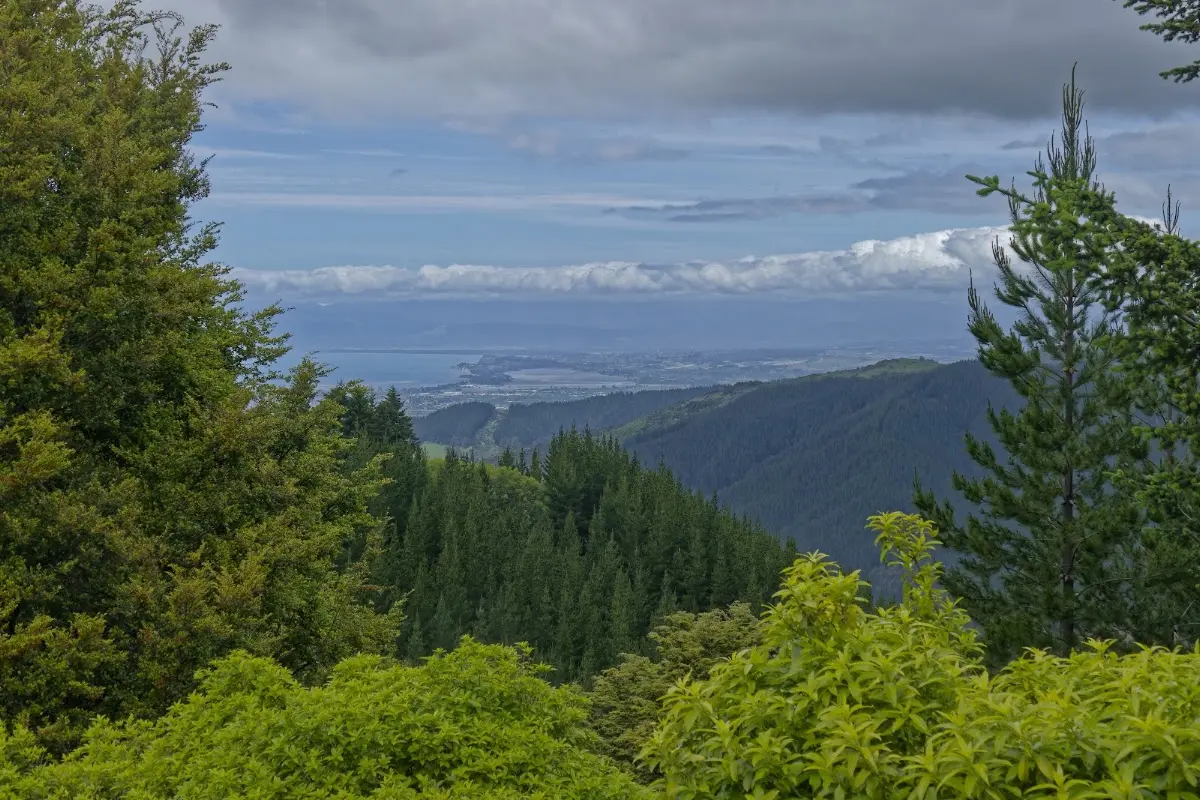
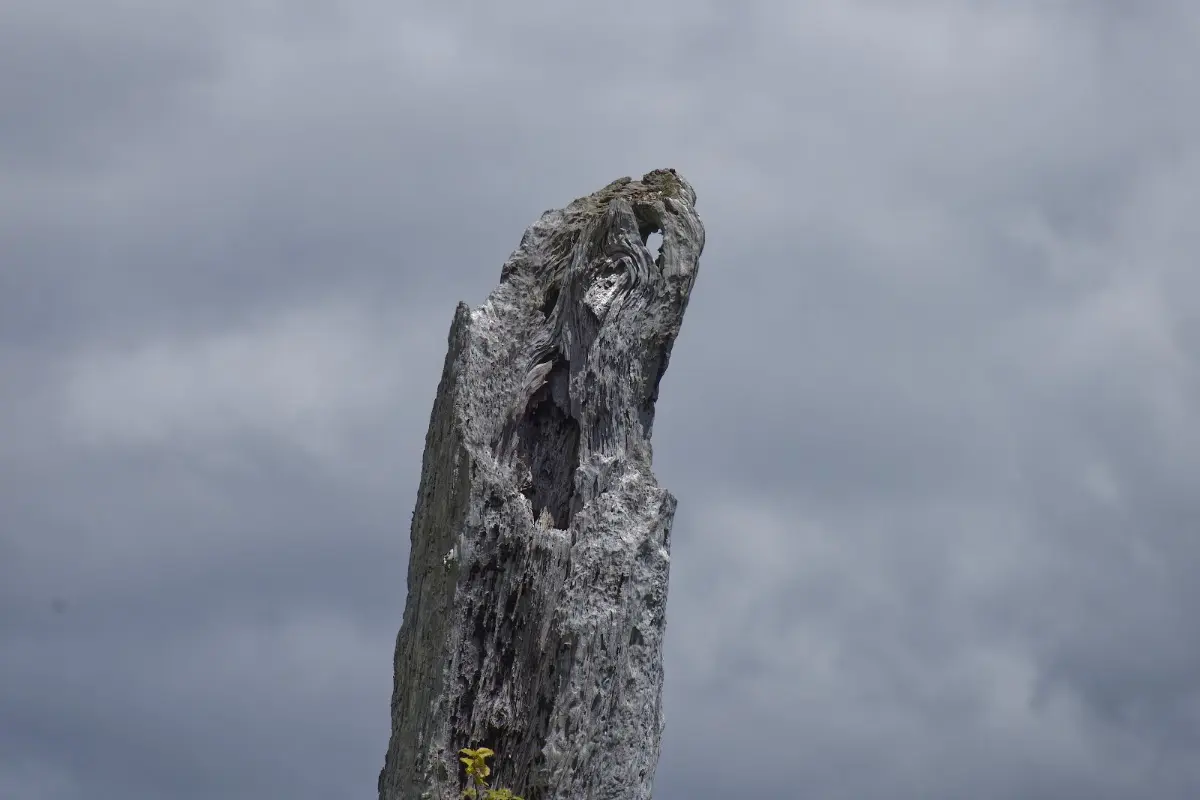
A storm-bleached snag standing sentinel near the top of Takaka Hill.
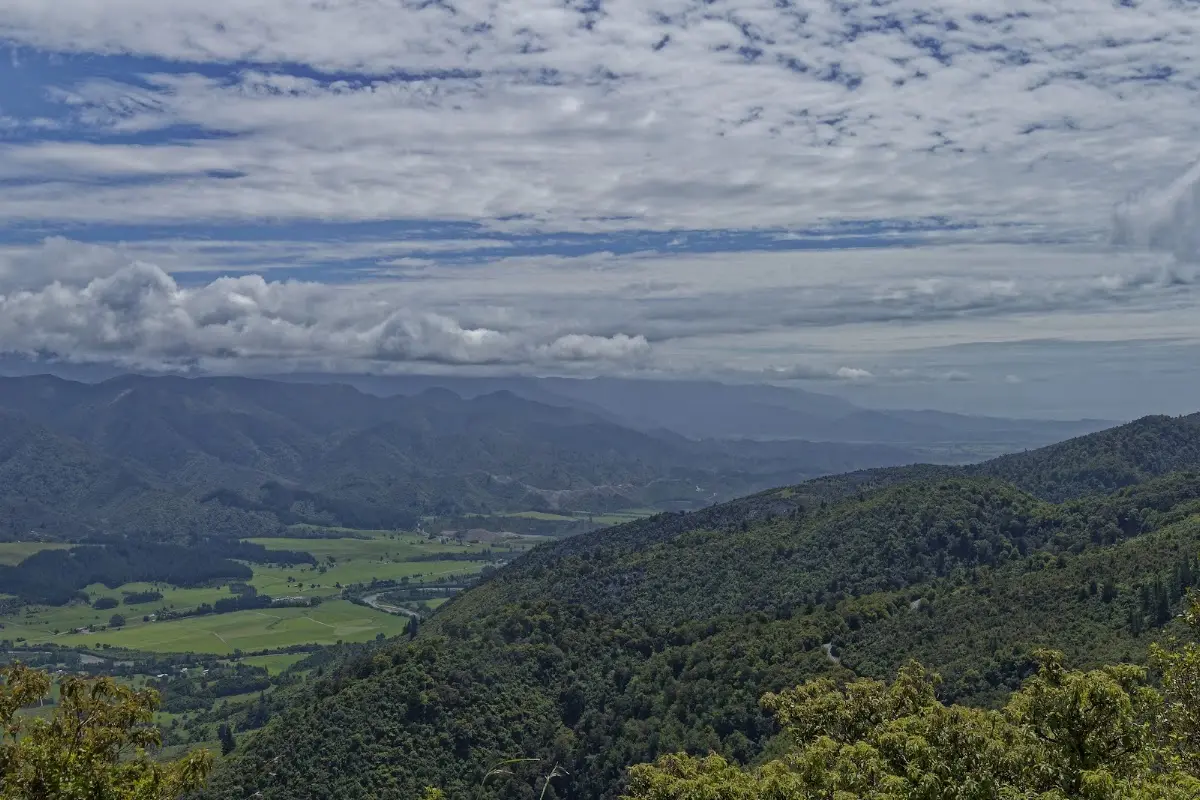
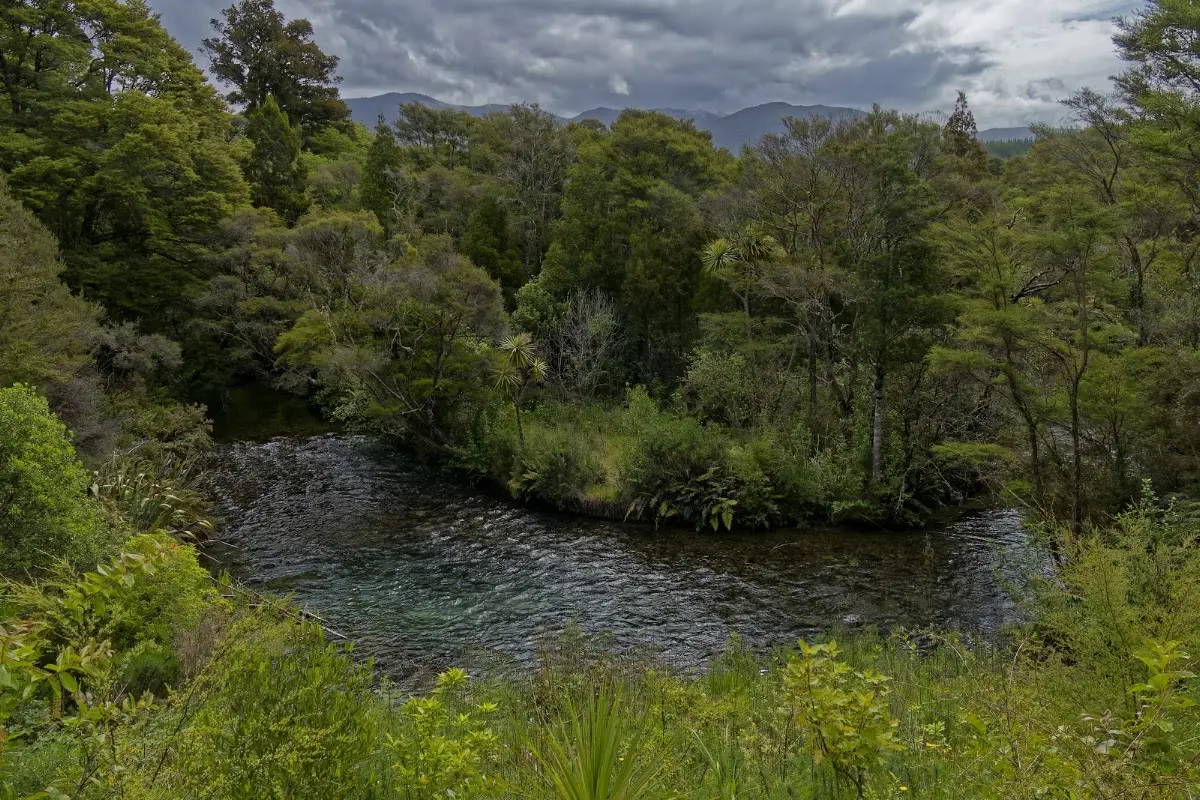
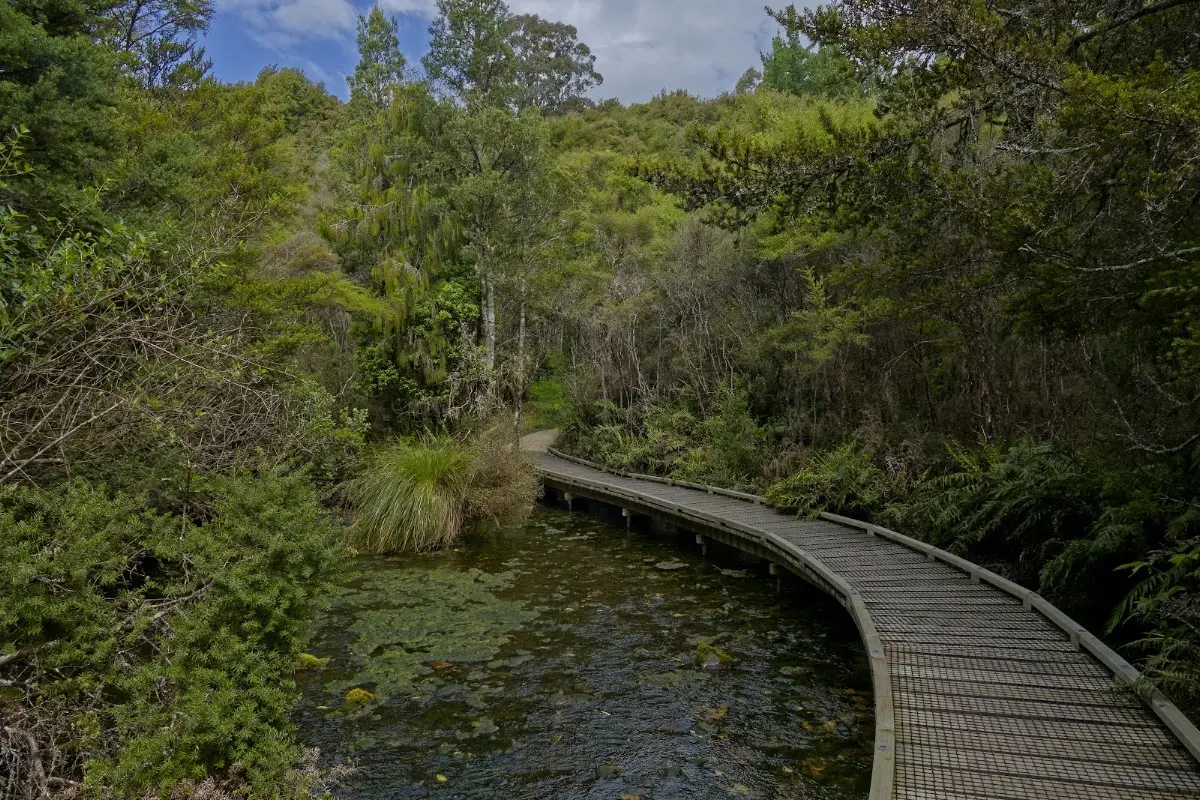
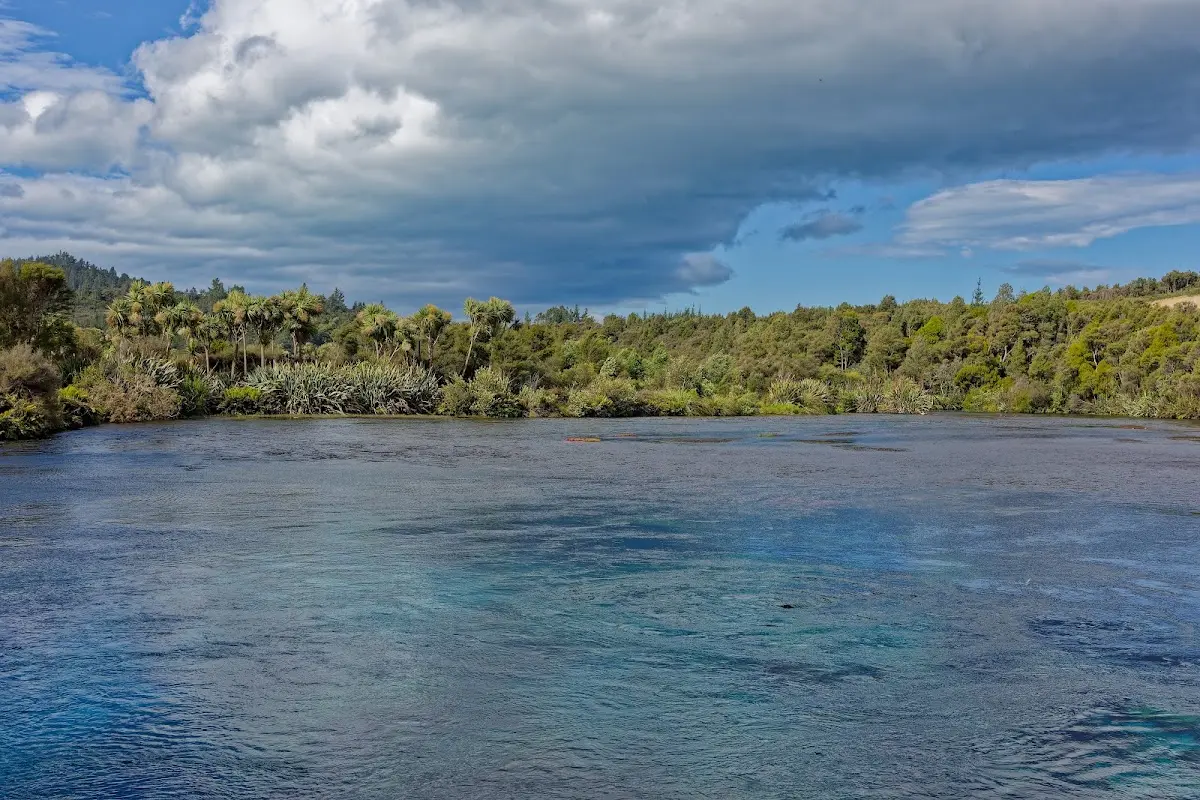
The spring-fed pool below Te Waikoropupū — water so clear it barely looks like water.
Te Waikoropupū Springs
Te Waikoropupū Springs, also known as Pupu Springs, lie in Golden Bay, within the Tasman District on the South Island. Renowned for their exceptionally clear water and large discharge volume, they hold deep spiritual importance for Māori and feed into the Te Waikoropupū River, a tributary of the Tākaka River.
Water Clarity: the springs boast the clearest water ever recorded from a karst spring, with horizontal visibility averaging 63 metres. Until 2011 they were considered second only to sub-glacial waters in Antarctica for clarity — Blue Lake, also in the Tasman District, now holds the freshwater record.
Aquifer: the springs draw on an aquifer beneath the Tākaka Valley covering 940 km² and rising to 1,650 metres, made up of the Takaka Unconfined Gravel, Takaka Limestone, and Arthur Marble aquifers — the last being the main source.
Volume: eight main vents discharge a mean outflow of 13.4 m³/s. The lake floor is covered in white sand, and smaller vents create "dancing sands" by carrying sand upward — a highlight for the scuba divers permitted to explore the springs.
Spiritual Significance: sacred to the local iwi and registered as wāhi tapu with the Māori Heritage Council, the springs are considered the legendary home of the taniwha Huriawa and are said to embody the connection between earth and sky.
Cultural Importance: signboards at the entrance describe the springs as a taonga (treasure) and a place of ceremonial blessing — a source of waiora, the purest form of water.
Conservation: local iwi and conservation authorities work together to preserve the springs' pristine condition for future generations.
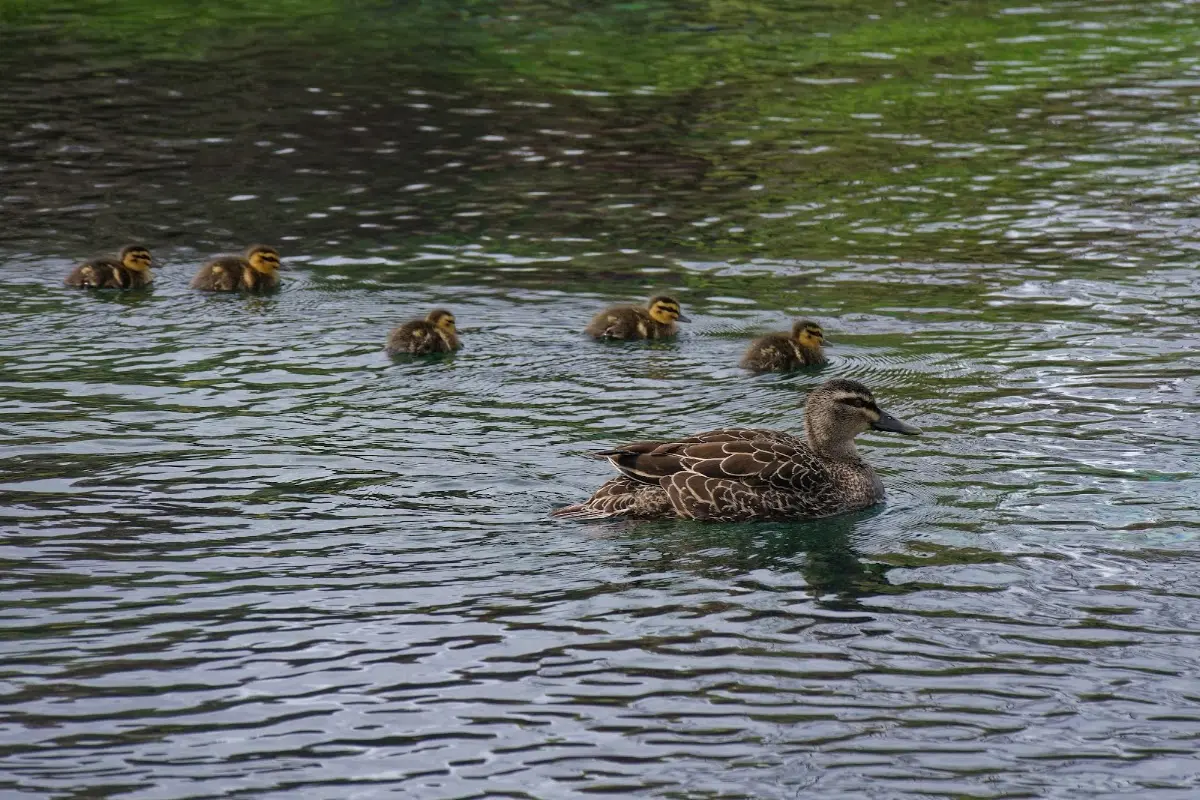
A family outing on the springs: five ducklings in tow.
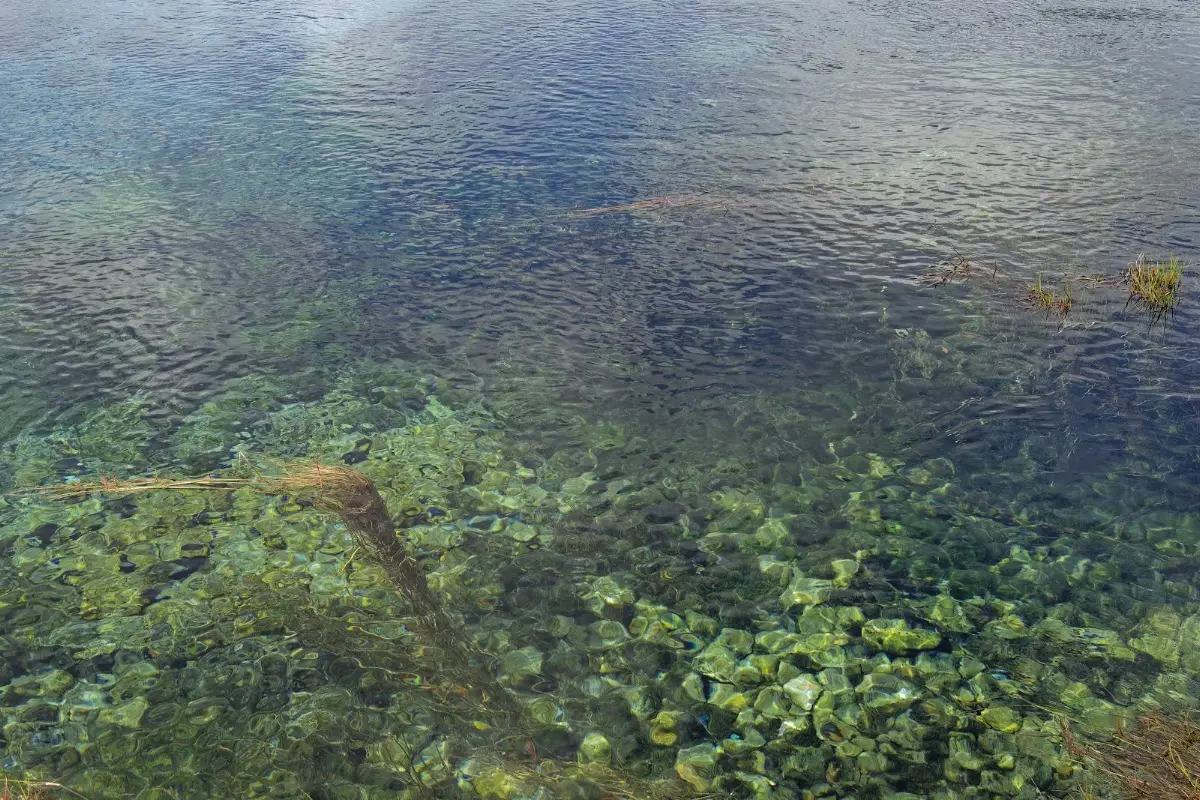
Every pebble on the bottom in sharp focus — the clarity everyone comes here for.
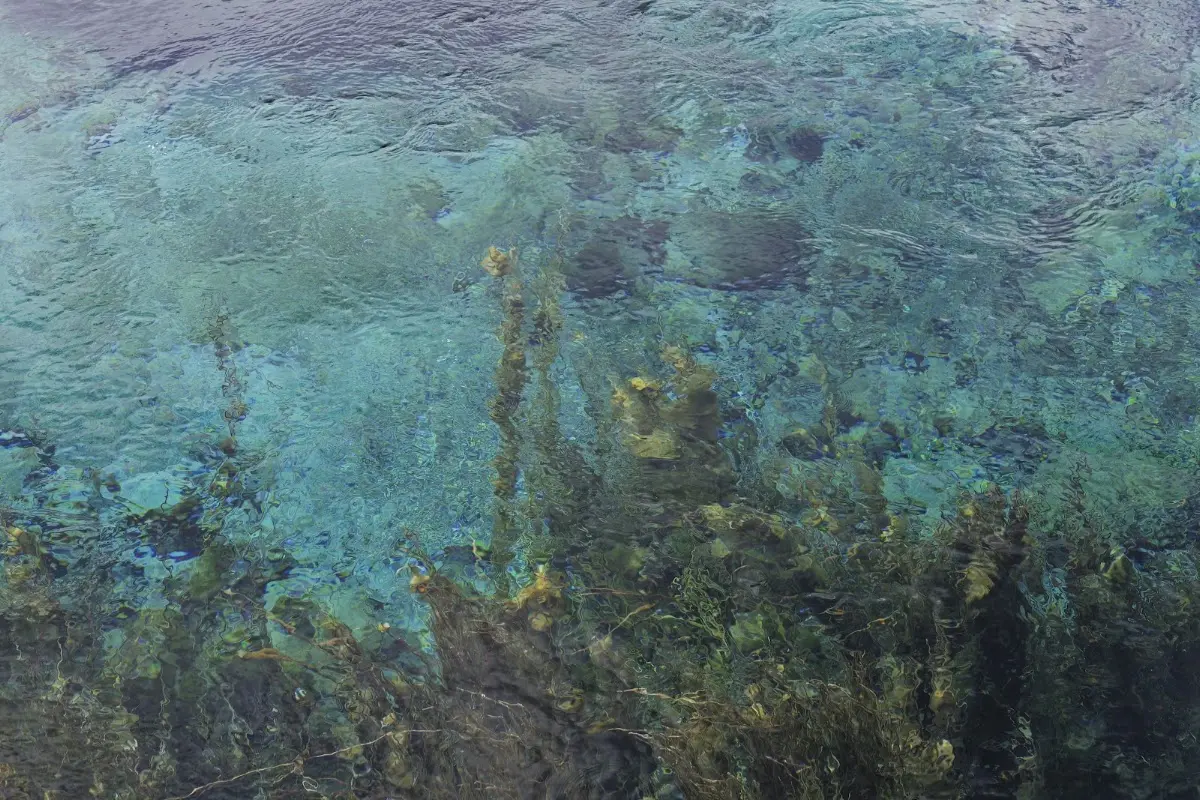
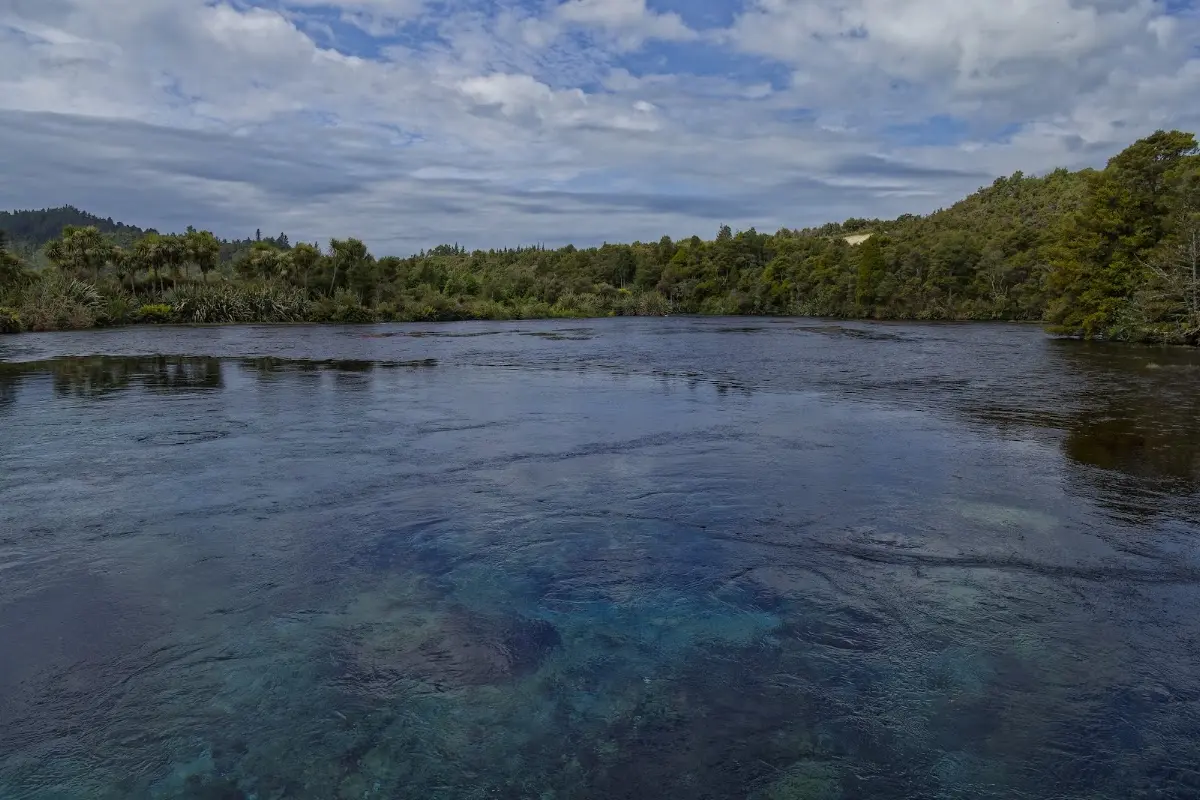
One of the main vents stirring the surface — the source of the "dancing sands."
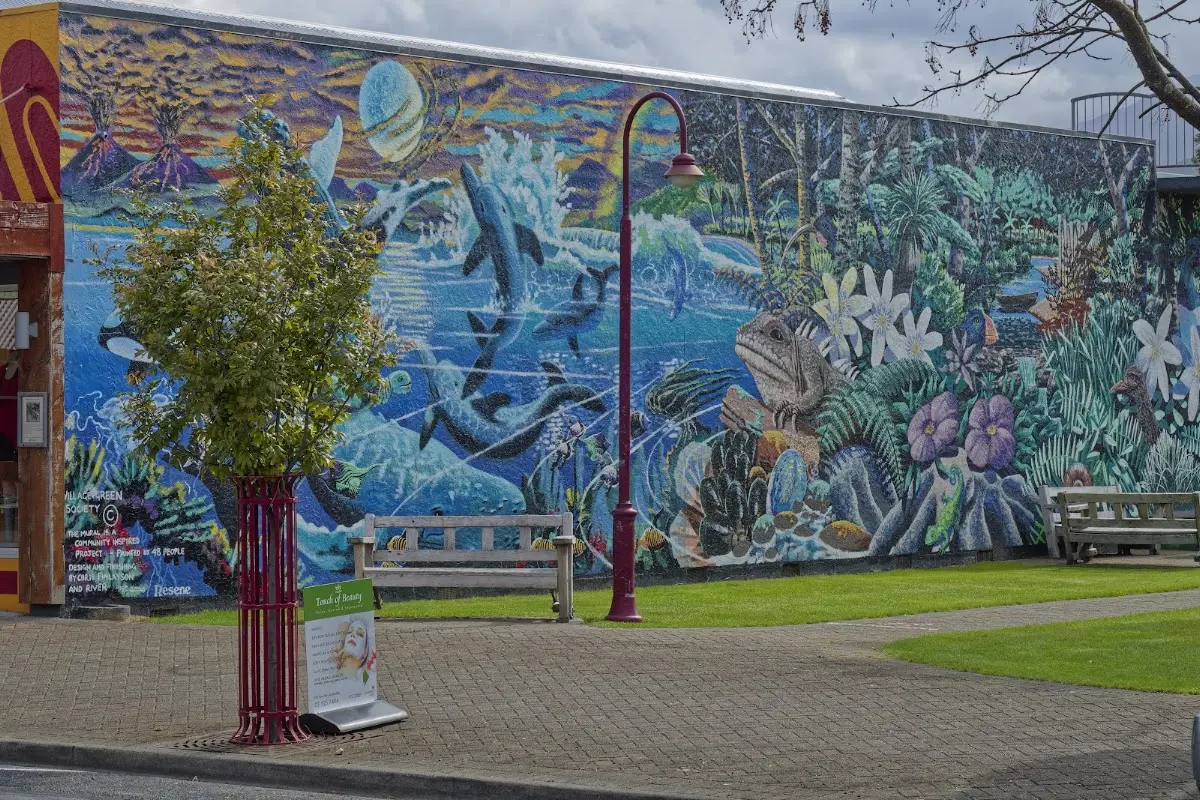
A community mural covers a whole wall in Tākaka — dolphins, tuatara, and a fair bit of local pride.
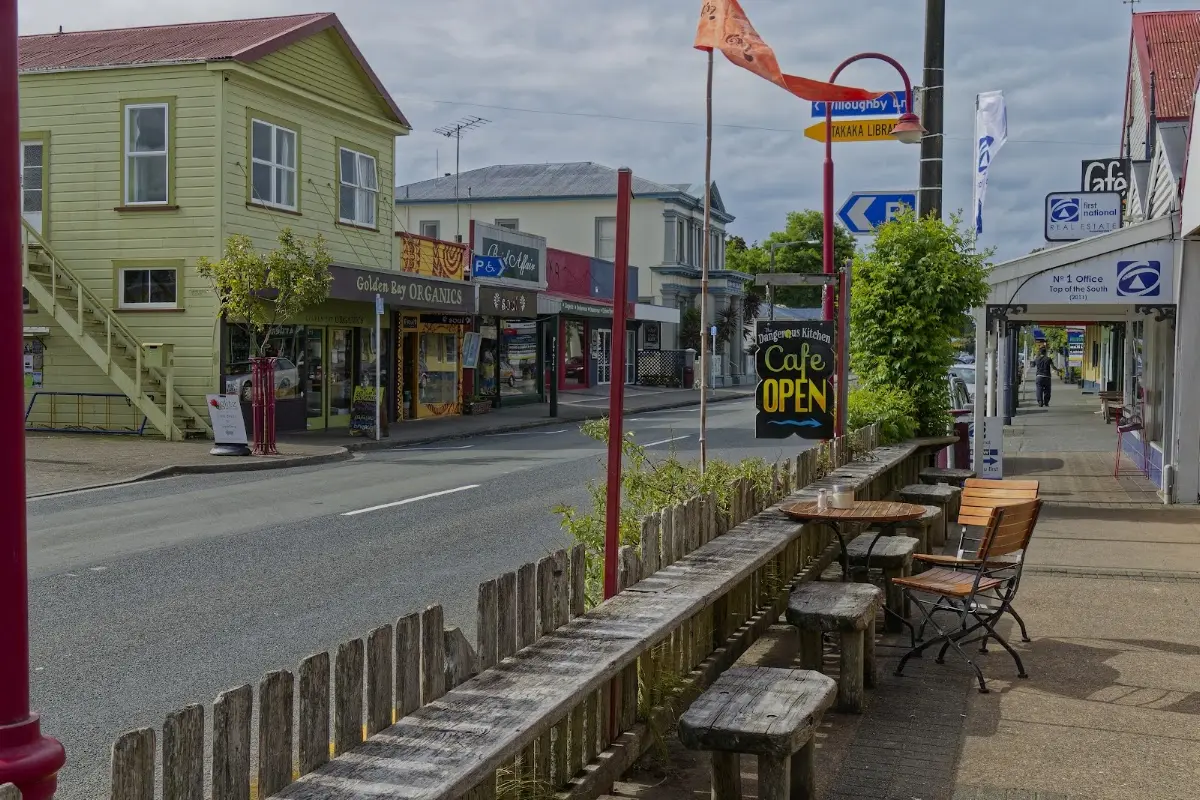
Tākaka's main street: organic groceries, a café called Dangerous Kitchen, and not much traffic.
At breakfast I met Inga and Günter from Munich-Westpark, and I went with them in their rental car to Farewell Spit and Collingwood. Cycling there in wind and rain would not have been much fun that day, so this turned out to be a very good alternative.
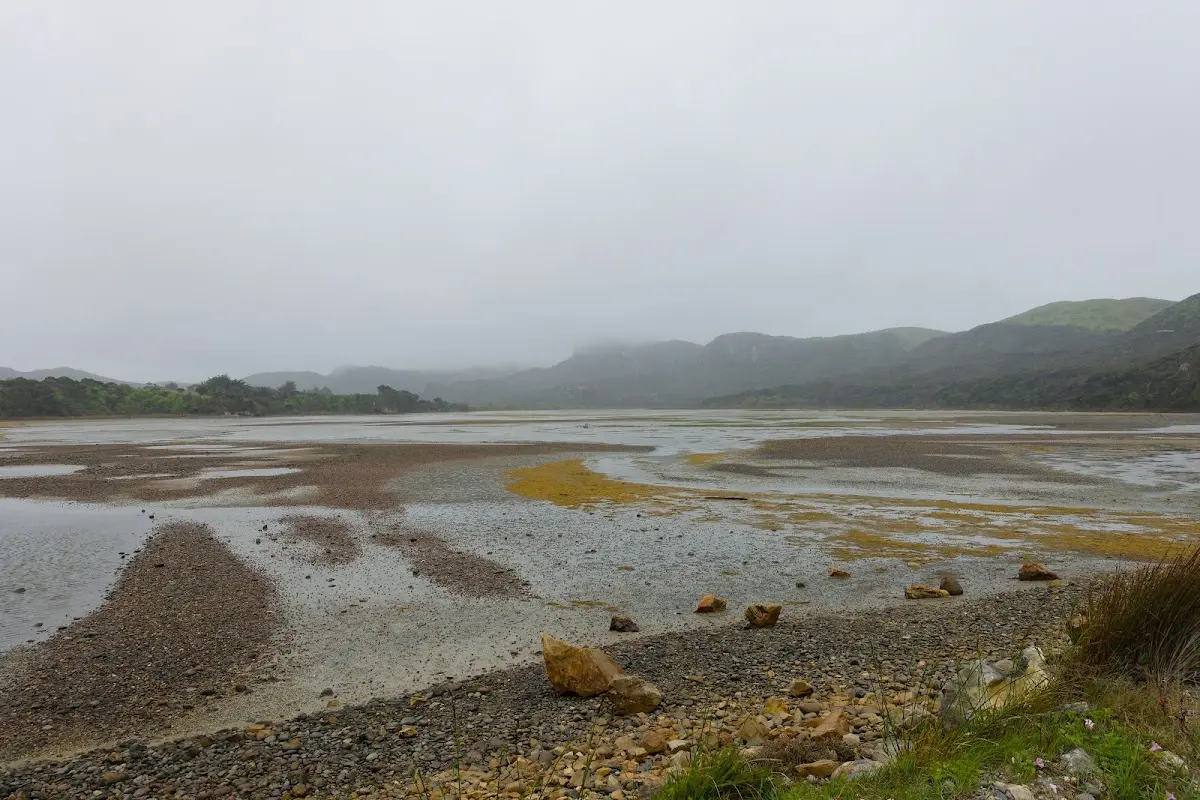
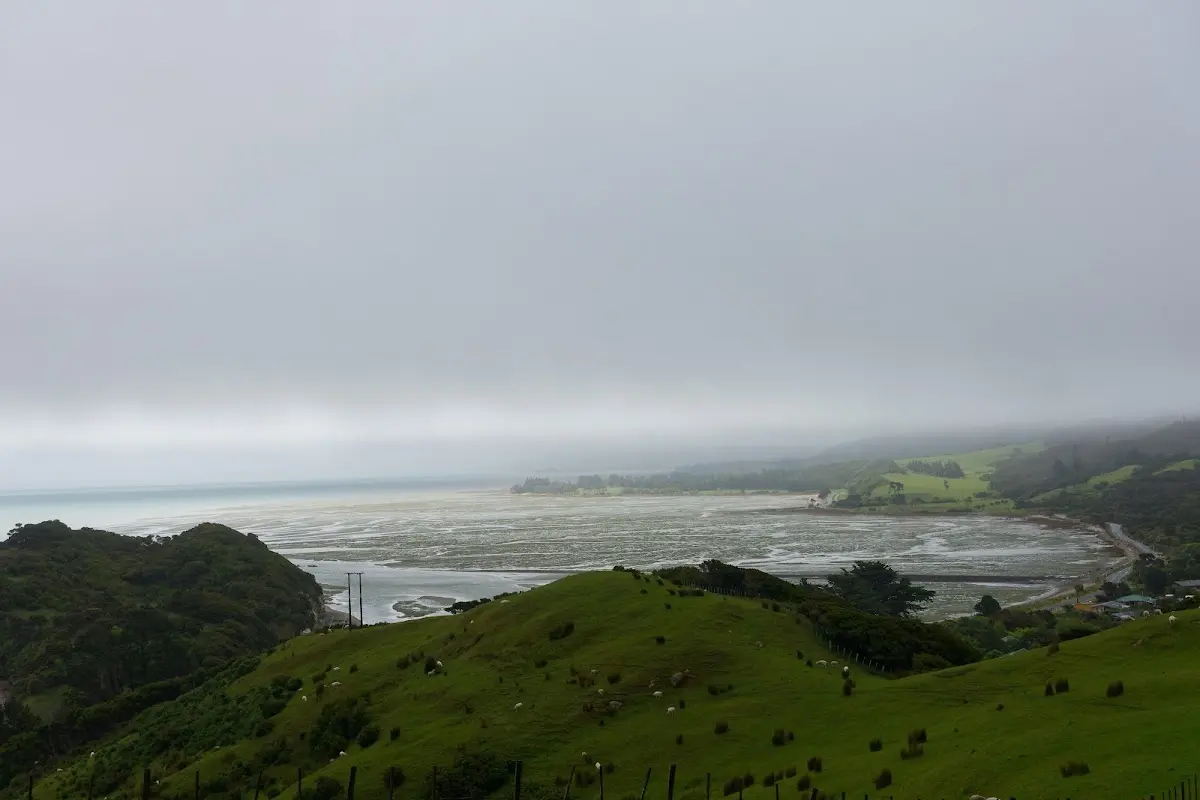
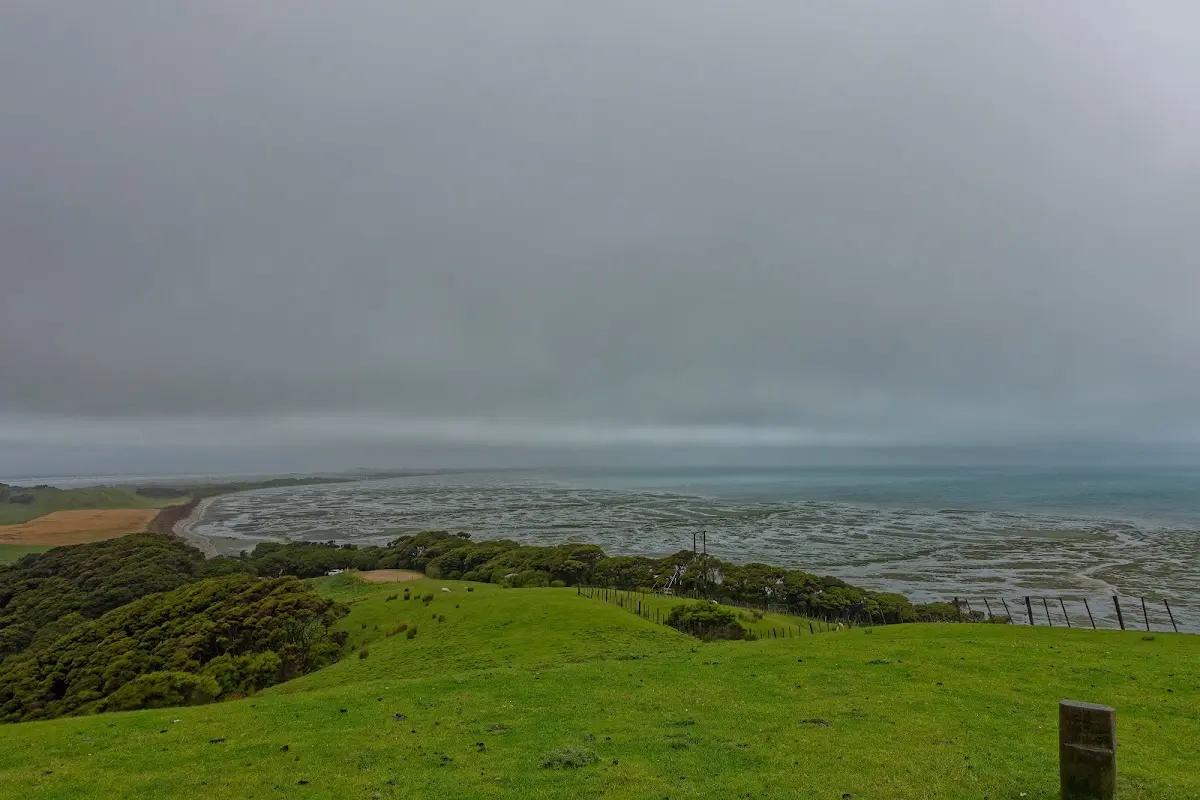
Golden Bay
Golden Bay / Mohua is a large, shallow bay in the Tasman District at the northern tip of the South Island, part of the Tasman Sea, lying northwest of Tasman Bay and Cook Strait. It is sheltered by Farewell Spit, a 26 km sandspit, and fed by the Aorere and Tākaka rivers.
Historically it served as a resting area for migrating whales and dolphins, including southern right and humpback whales, with pygmy blue whales sometimes seen offshore. The west and north are largely unpopulated, while the south coast holds the towns of Tākaka and Collingwood, plus Abel Tasman and parts of Kahurangi National Parks.
A popular destination for its good weather and relaxed pace, the bay's beaches — Tata Beach among them — draw retirees and holidaymakers who keep holiday homes, known locally as baches.
The name has shifted several times: Māori called it Mohua after a native bird; Abel Tasman named it Moordenaarsbaai in 1642 after a violent encounter with local Māori; it later became Massacre Bay, then Coal Bay, and finally Golden Bay following the gold discoveries of the late 1850s. In 2014 it was officially given the dual name Golden Bay / Mohua.
Māori have lived along its shores since at least 1450, the earlier Waitaha, Ngāi Tara, and Ngāti Wairangi displaced by Ngāti Tūmatakōkiri in the early 1600s. Tasman's 1642 arrival ended in violence, giving the bay its first European name.
European settlement began in 1842 with the Lovell family at Motupipi. Coal and gold brought further settlers, and the 1888 road over Tākaka Hill finally gave the bay land access — before that it was reached mainly by sea.
Coal mining ran at Pūponga from 1895 until 1974. The Onekaka Ironworks, built in 1924 and powered by a hydroelectric scheme, closed in 1935, was nationalised, but never revived — it shut for good in 1954.
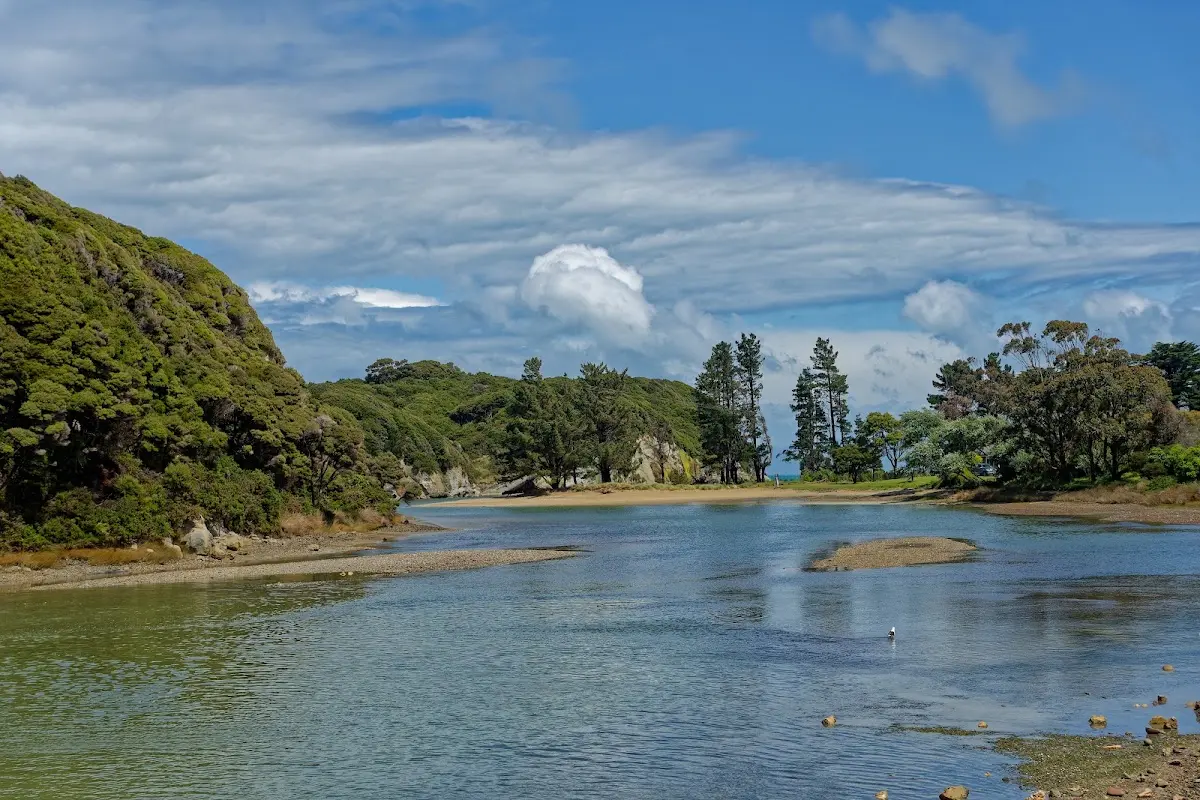
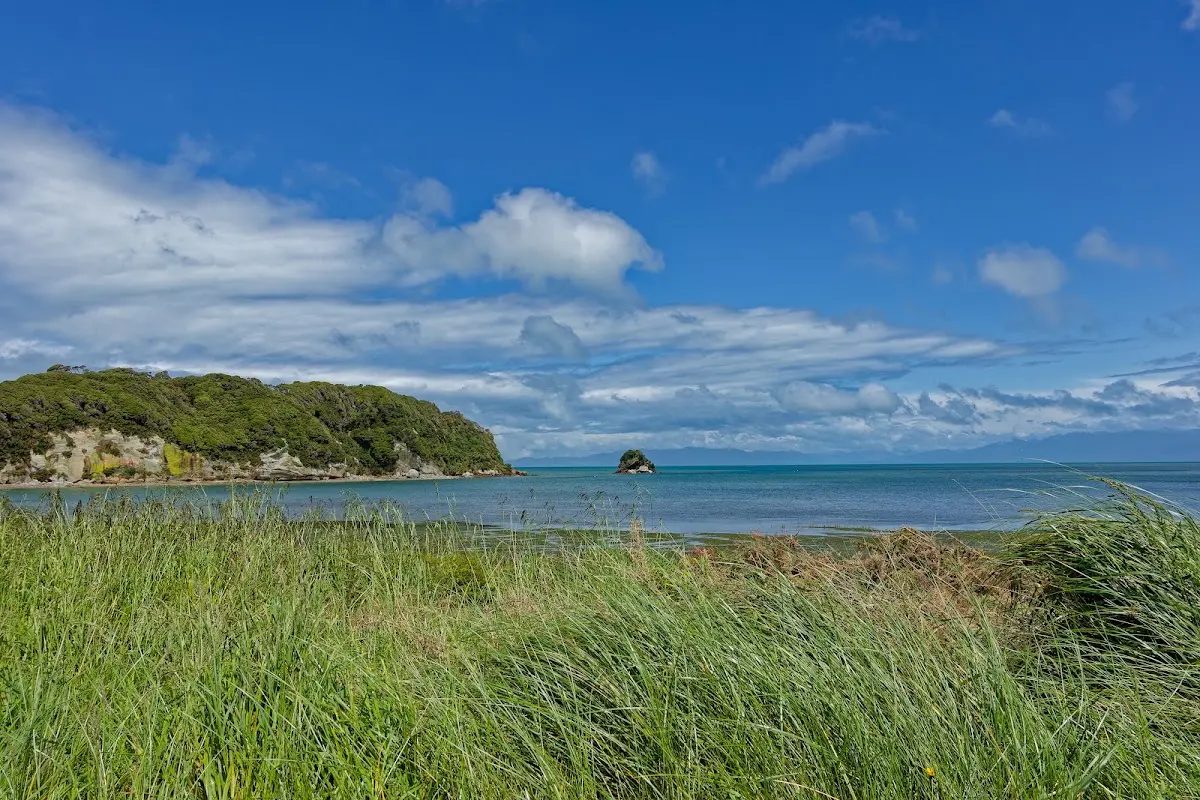
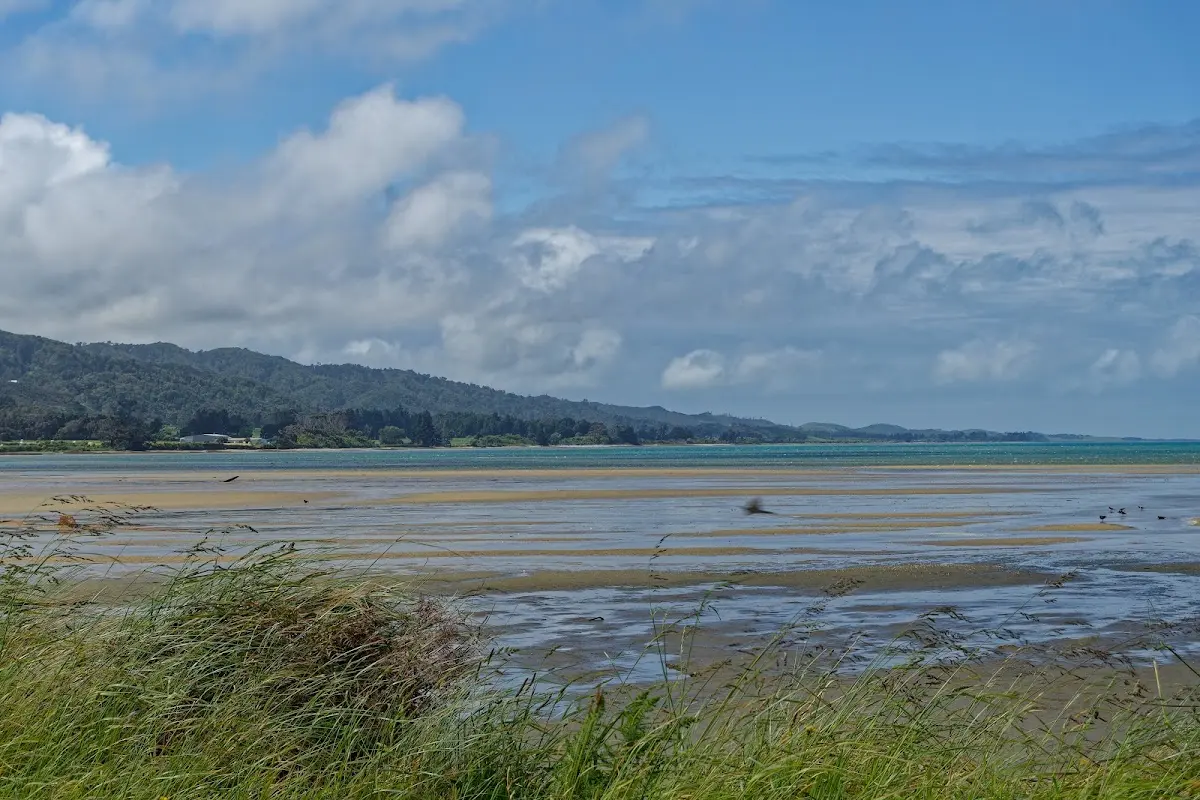
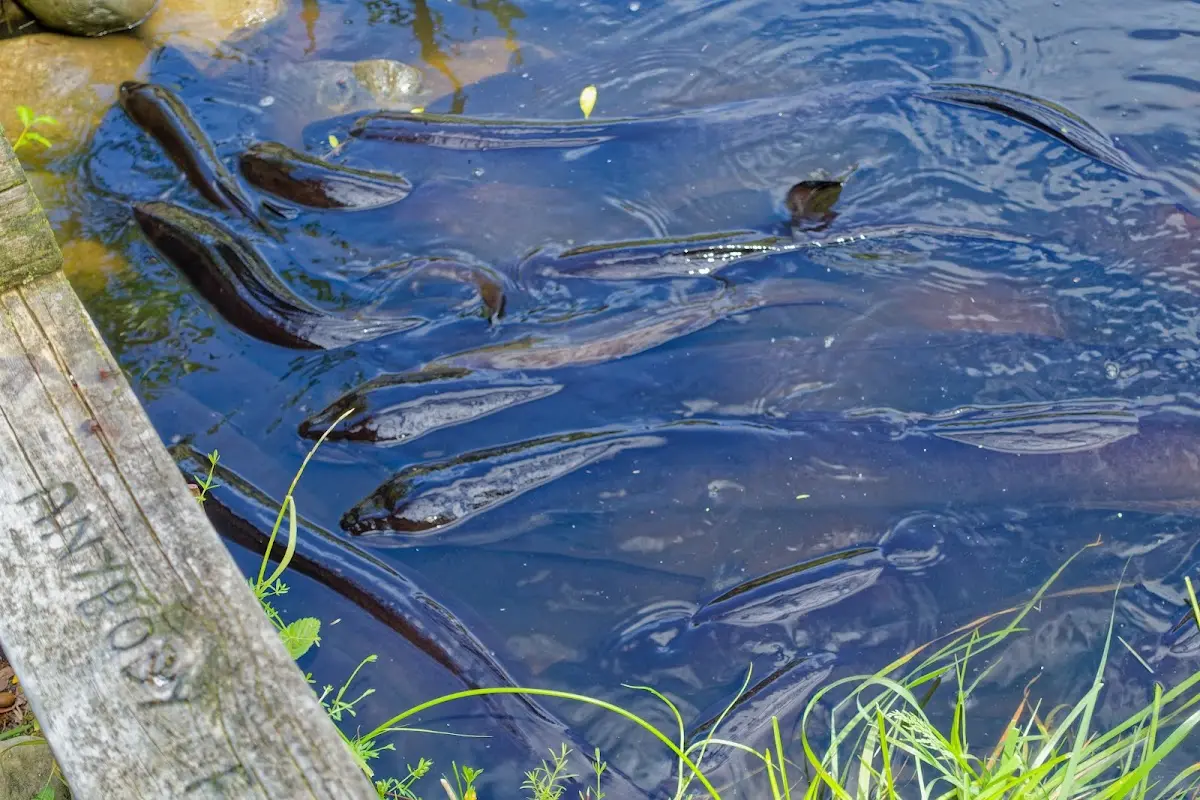
The famous Collingwood eels, gathering at the water's edge where visitors come to feed them.
Colingwood Tame Eels
We are long finned eels. NZ largest native fish. We live up to 100 years. We can live out of water. We breed only once and then die. Eeels go to breed 25-100 years. We breed in Tongan Trench. Baby eels swim back to NZ. Large eels like us are female. We are about 50 years old. We are not covered in slime. Slime is only used in defence.
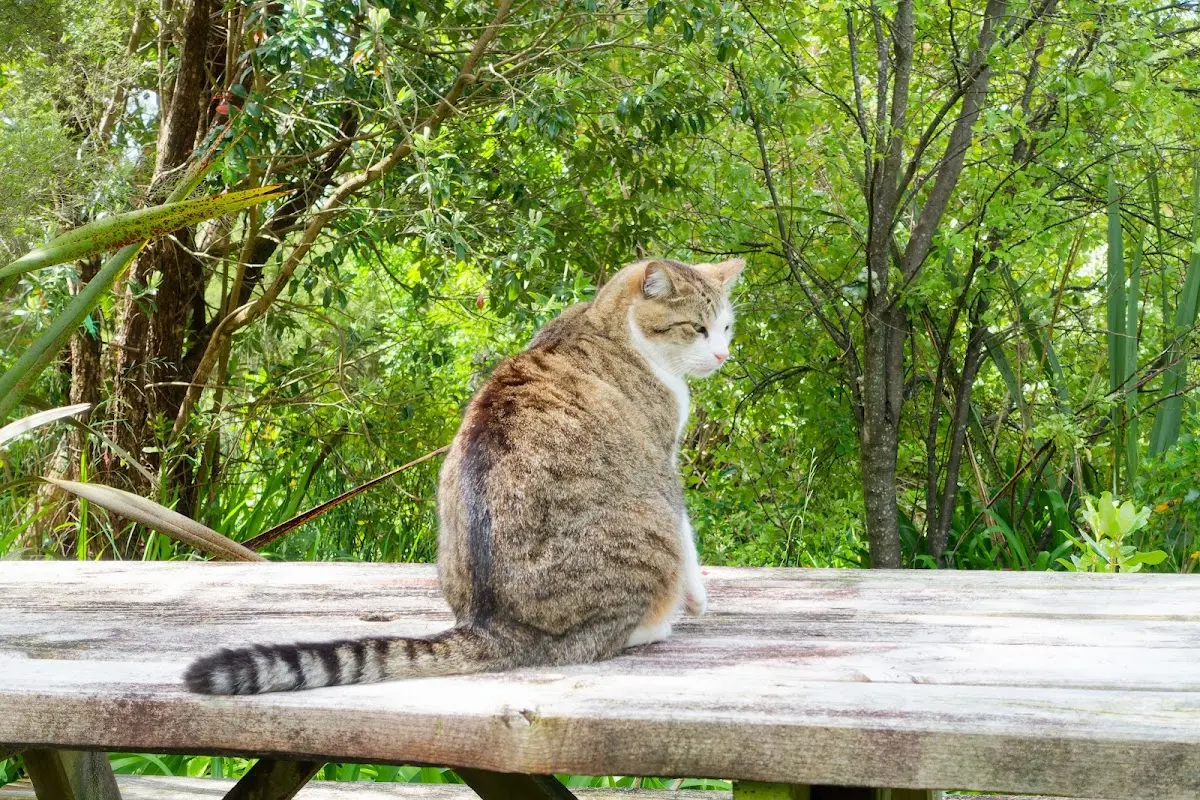
The lodge cat, unconcerned by the nearby eels.
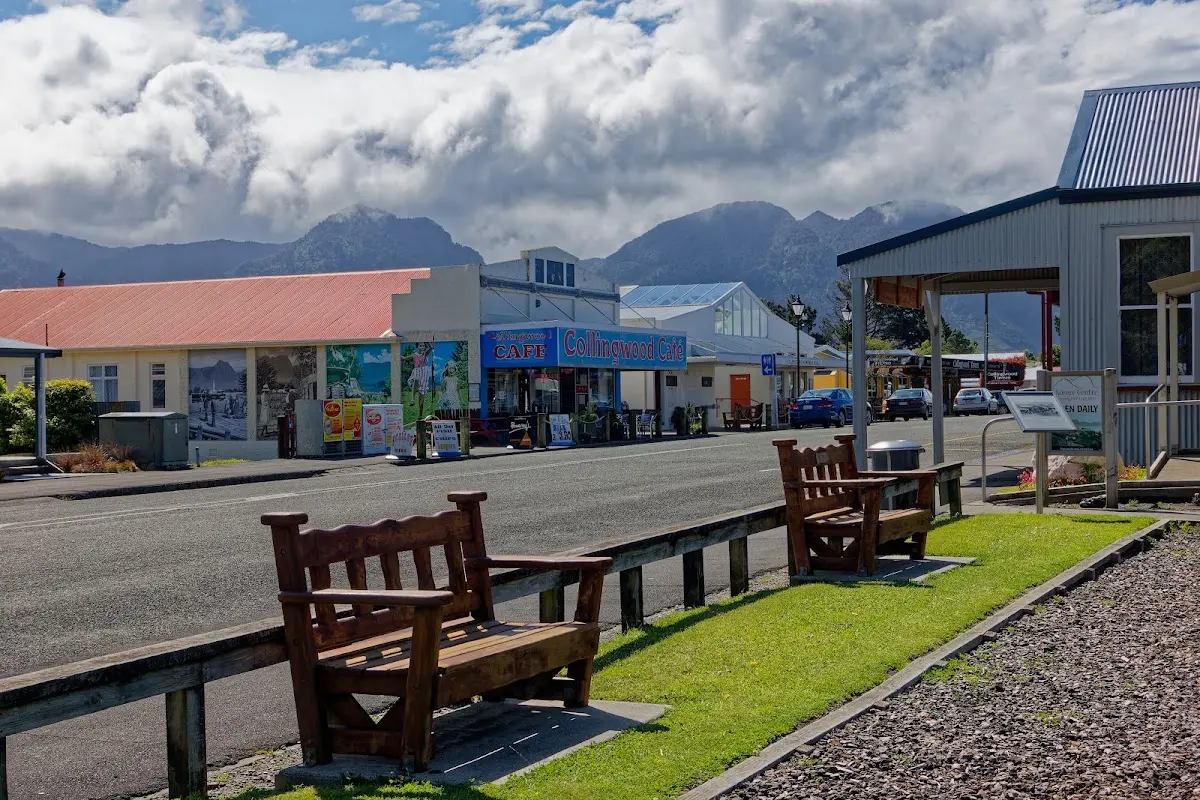
Collingwood's short main street, with the mountains crowding in right behind it.
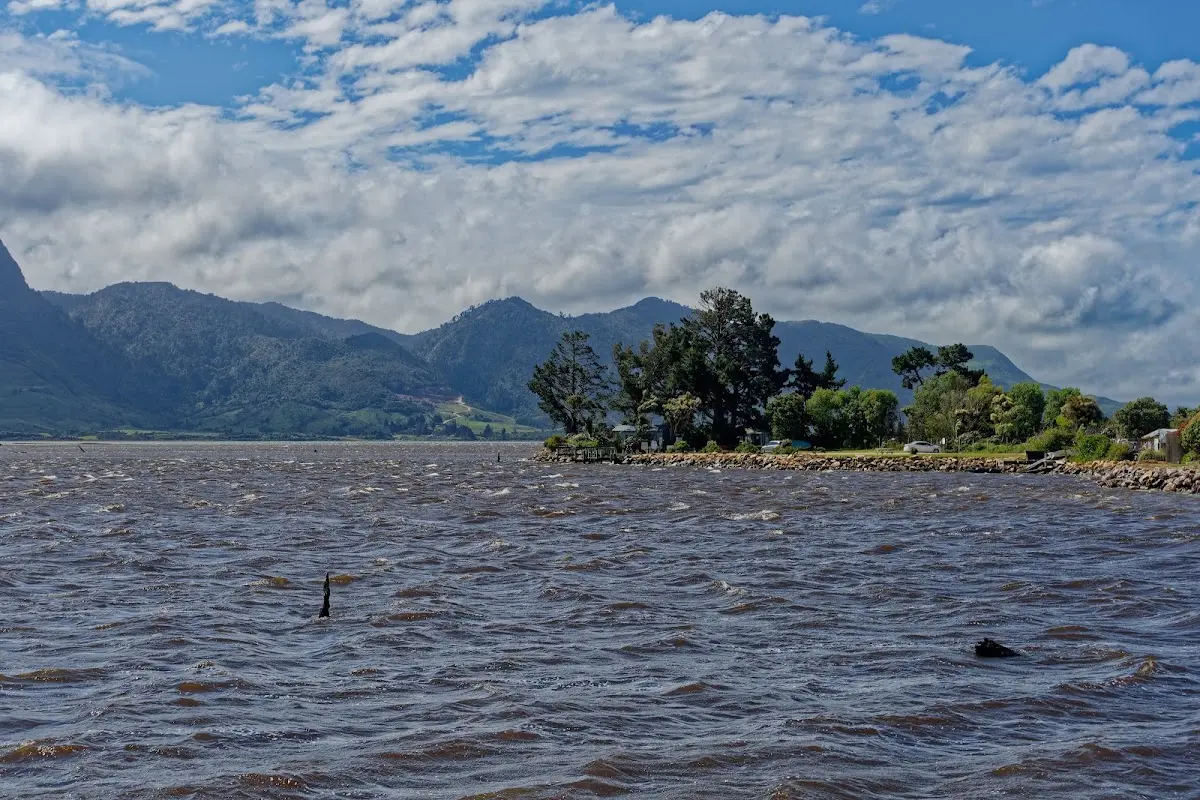
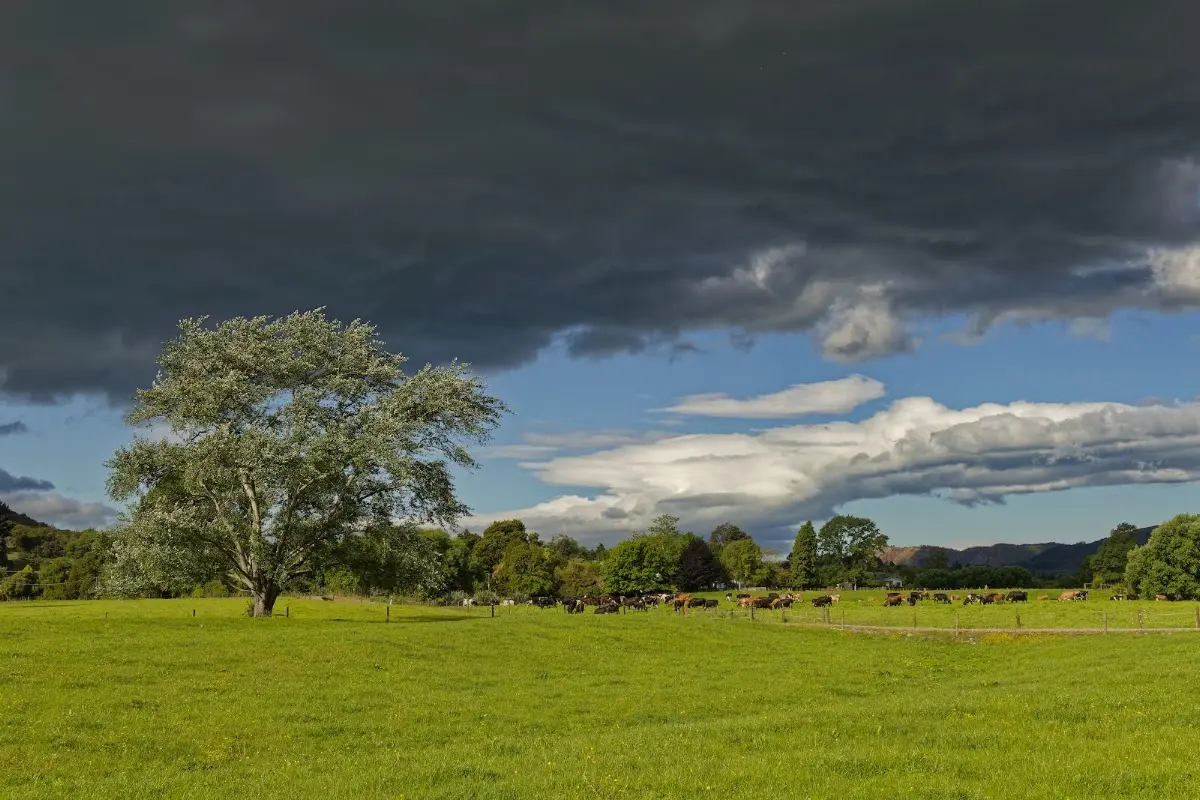
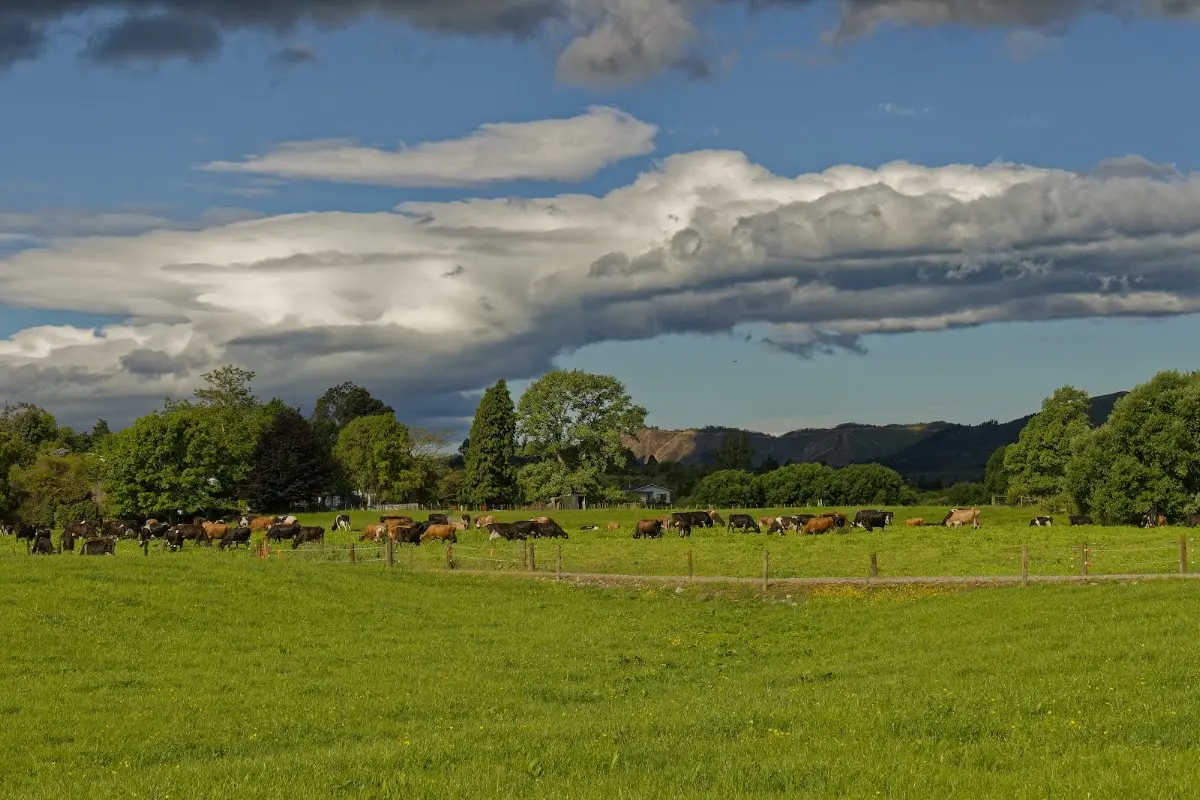
Back from Golden Bay to Motueka, you first have to climb Takaka Hill again — about 800 metres — and then, to start the track from Mārahau, another smaller hill of about 250 metres has to be crossed. Old MacDonald's Farm in Mārahau turned out to be a good place to store my bike in a shed at the campsite.
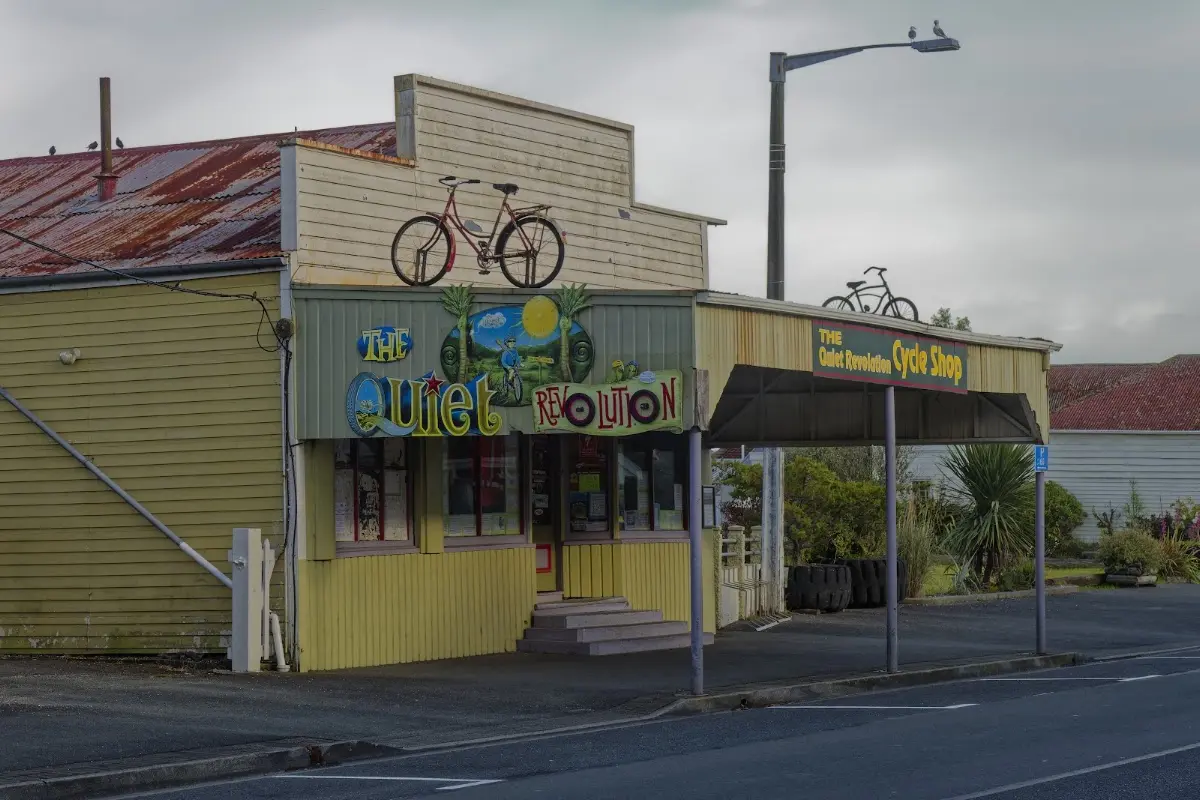
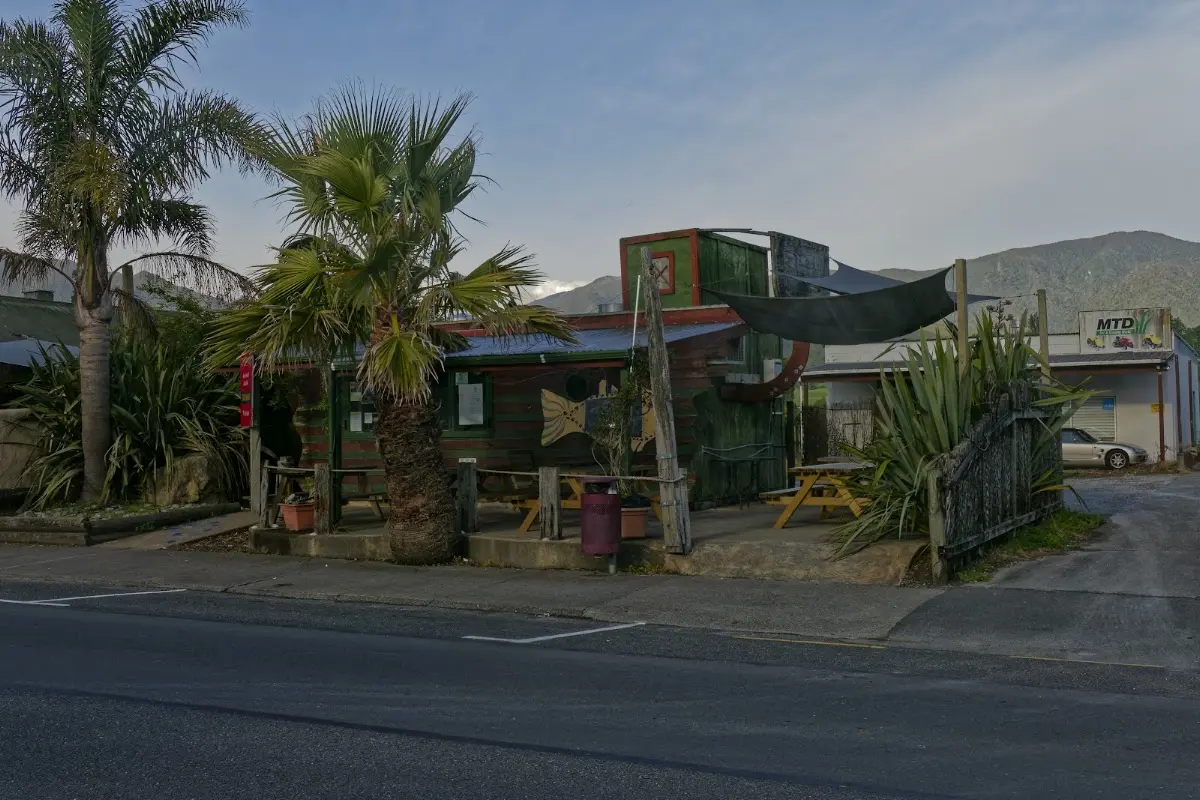
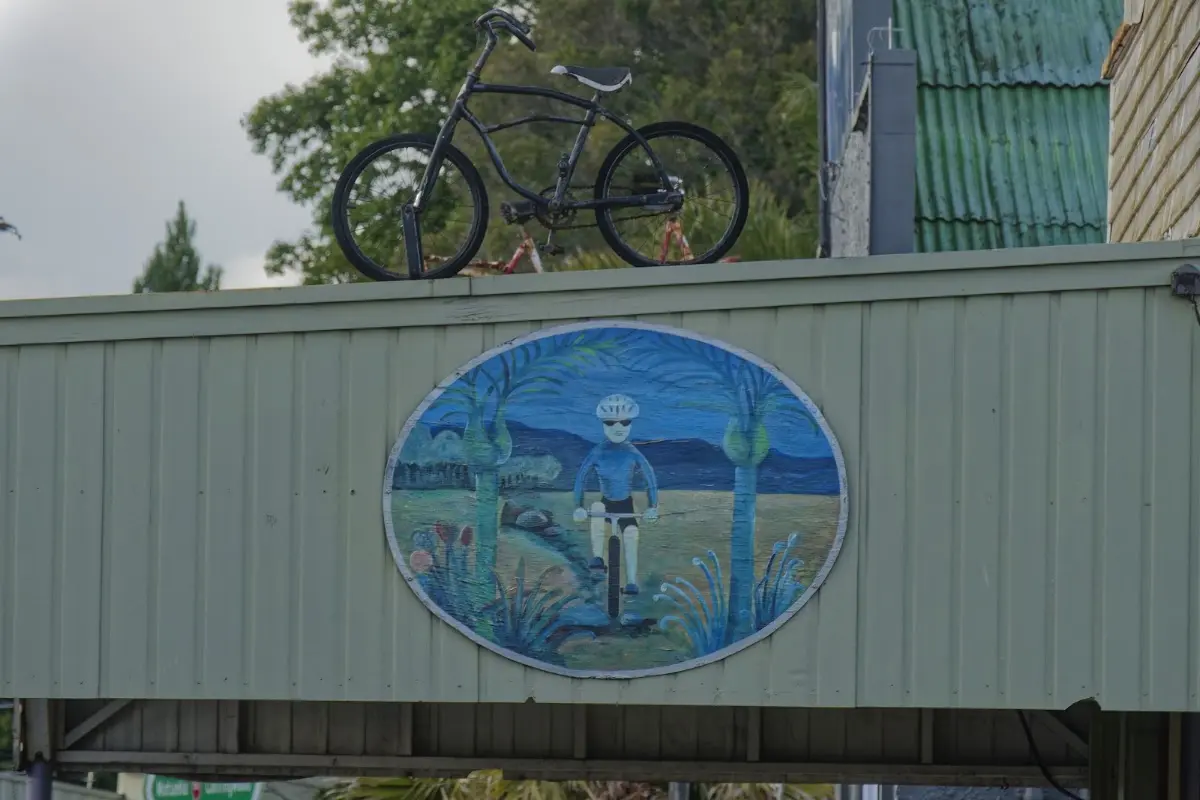
The Quiet Revolution — Motueka's cycle shop, bicycle nailed to the roof and all.
Bicycle Wisdom
"U can't buy happiness but u can buy a bike and that's pretty close."
"When the spirits are low, when the day appears dark, when work becomes monotonous, when hope hardly seems worth having, just mount a bicycle and go out for a spin down the road, without thought on anything but the ride you are taking."
- Arthur Conan Doyle
"It thought of that while riding my bicycle."
- Albert Einstein
"Life is like a 10-speed bicycle. Most of us have gears they never use"
- Charles Schultz
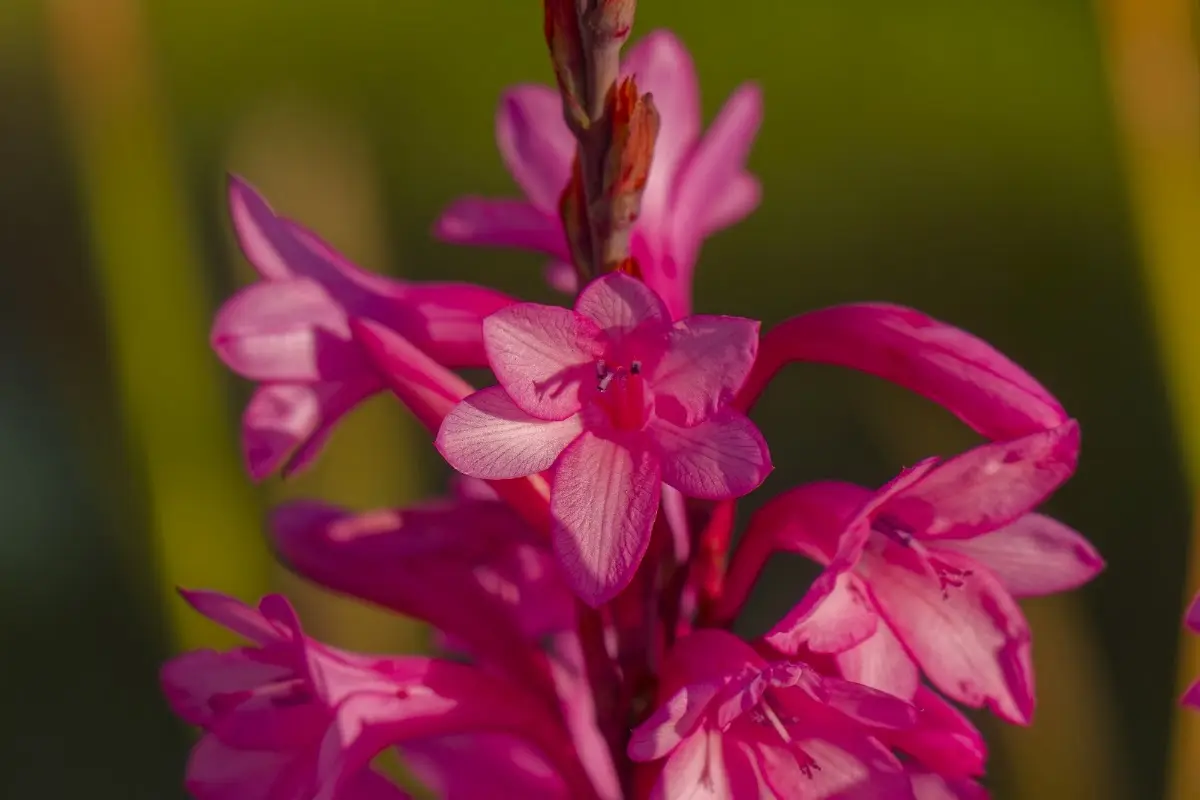
Watsonia catching the early light on the roadside.
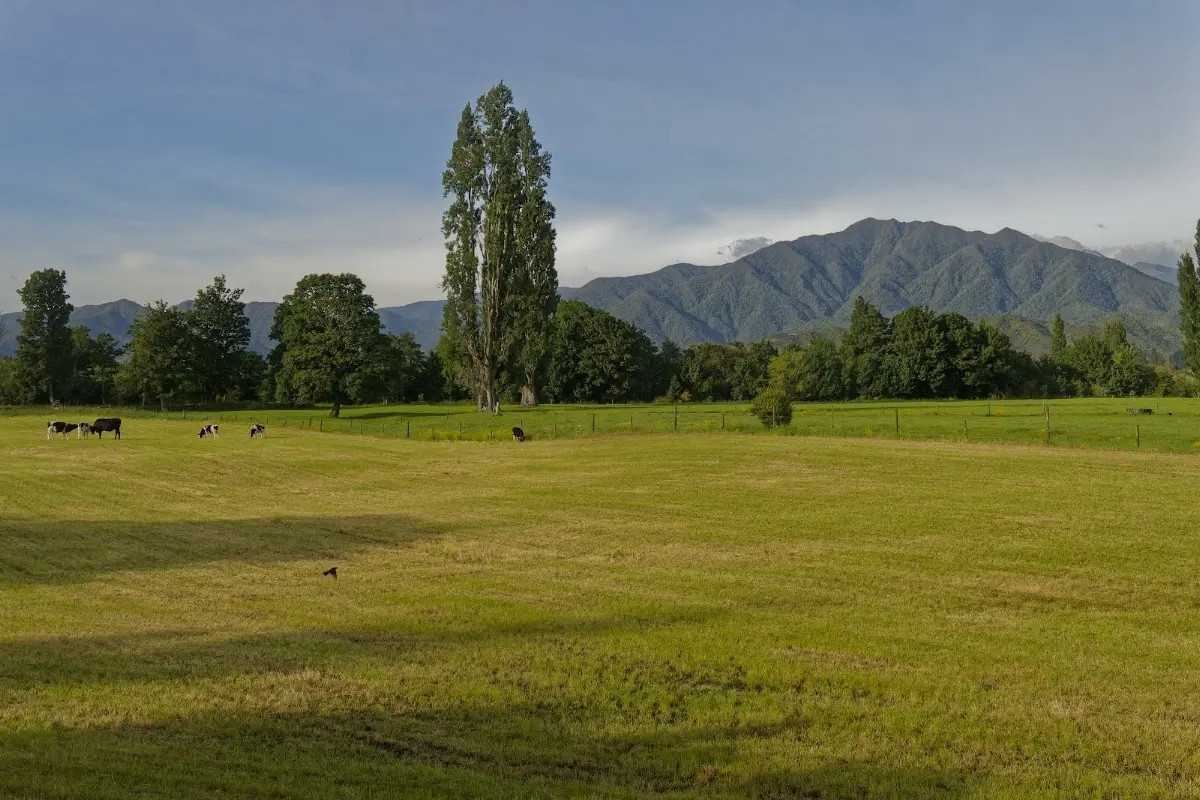
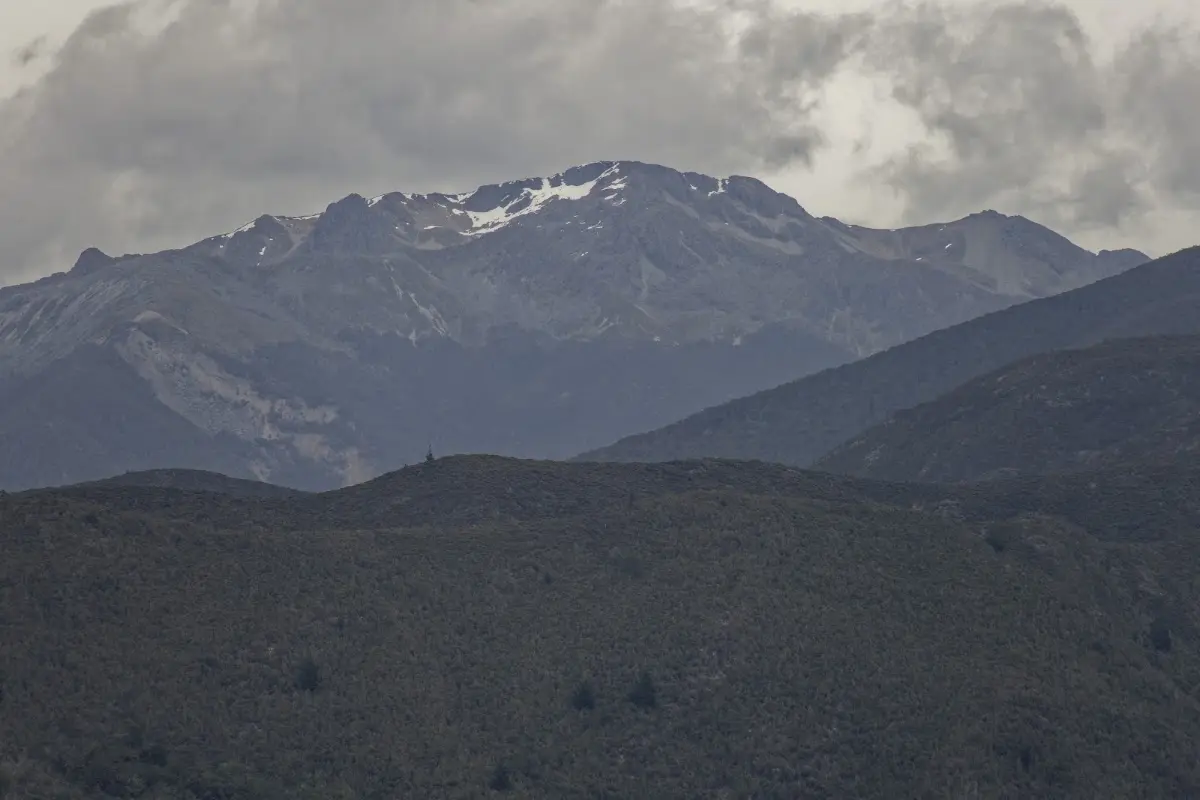
Snow still clinging to the peaks above the valley, even this late in the season.
Motueka
Motueka is a town on the South Island of New Zealand, near the mouth of the Motueka River on the western shore of Tasman Bay. It is the second-largest town in the Tasman Region, with a population of 8,300 as of June 2024. The area is known for its apple, pear, and kiwifruit orchards and specialised crops like hops, and was once the centre of New Zealand's tobacco growing until the early 1980s.
Popular with holidaymakers, the region has nearby beaches like Kaiteriteri and Mārahau and some of the country's highest annual sunshine hours. It serves as a base for tourism into Abel Tasman, Kahurangi, and Nelson Lakes National Parks, and draws outdoor enthusiasts to its limestone caves, sea kayaking, tramping, and canyoning.
Motueka has a lively arts scene of local artists, potters, and reggae musicians. Nearby, the Riverside Community in Lower Moutere is New Zealand's oldest cooperative living community, founded in the 1940s as a pacifist intentional community.
The name Motueka comes from Māori, meaning "weka island," after a bird of the rail family — the town is colloquially known as "Mot."
The first known European visitor was French explorer Jules Dumont d'Urville in 1827. The New Zealand Company's Nelson expedition, led by Captain Arthur Wakefield, arrived in 1841, and Motueka was established as a town in 1842 thanks to its fertile soil.
Motueka was administered as part of the Nelson Province from 1853 to 1876, became a borough in 1900, and its post office building opened in 1902, officiated by Sir Joseph Ward.
The Motueka war memorial, unveiled in 1922, commemorates the 32 soldiers from the district who died in World War I; a 1957 plaque honours the 35 who died in World War II.
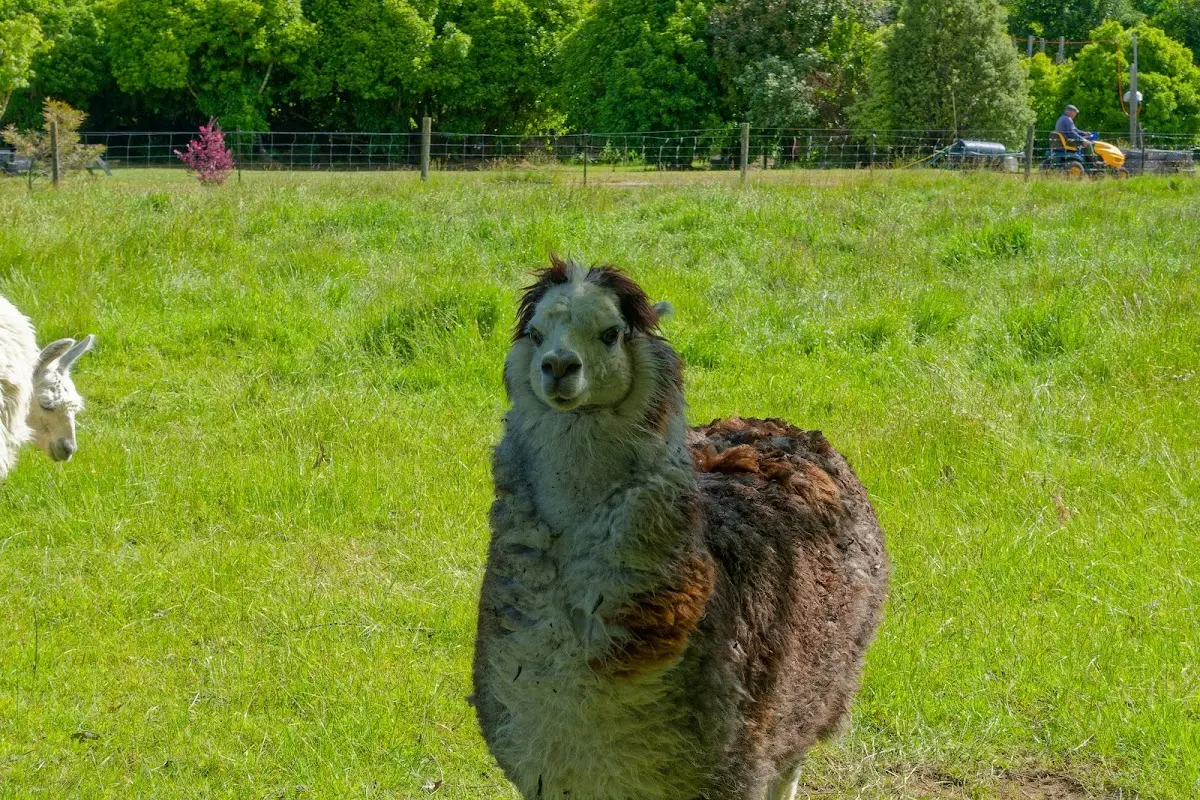
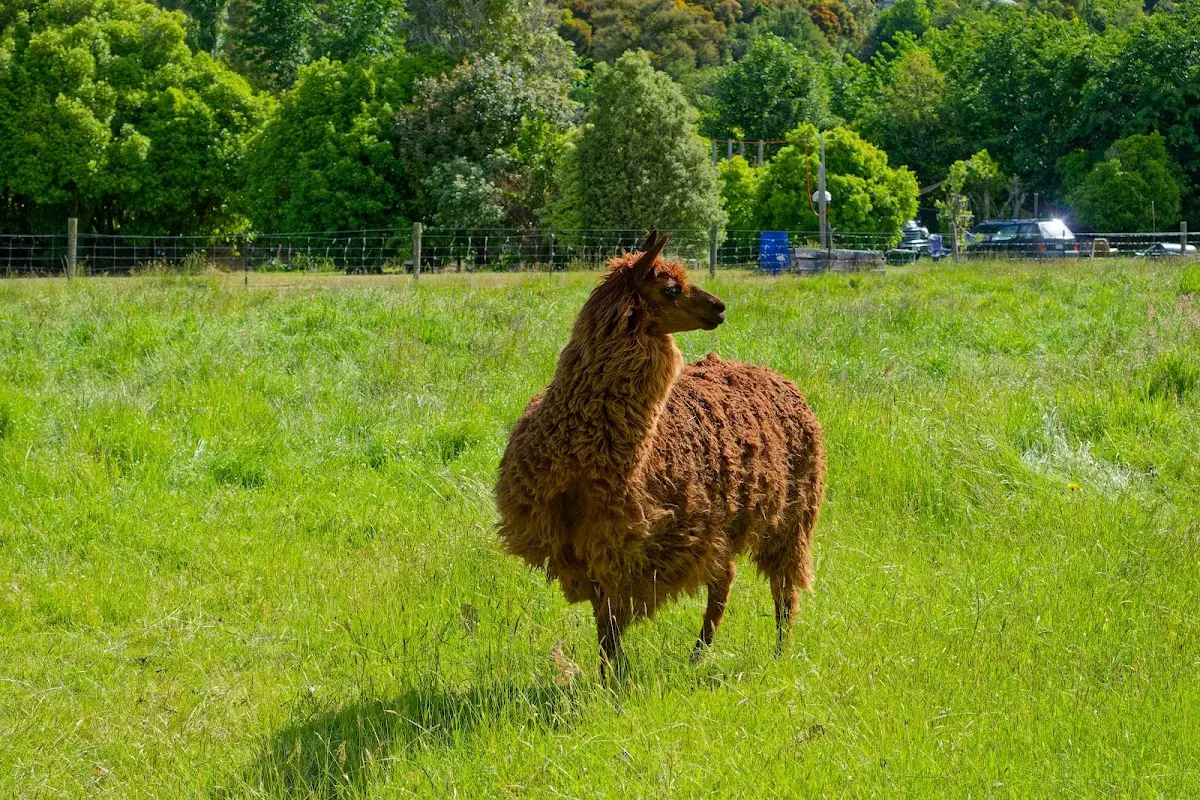
A llama at the campsite, watching closely as I passed.
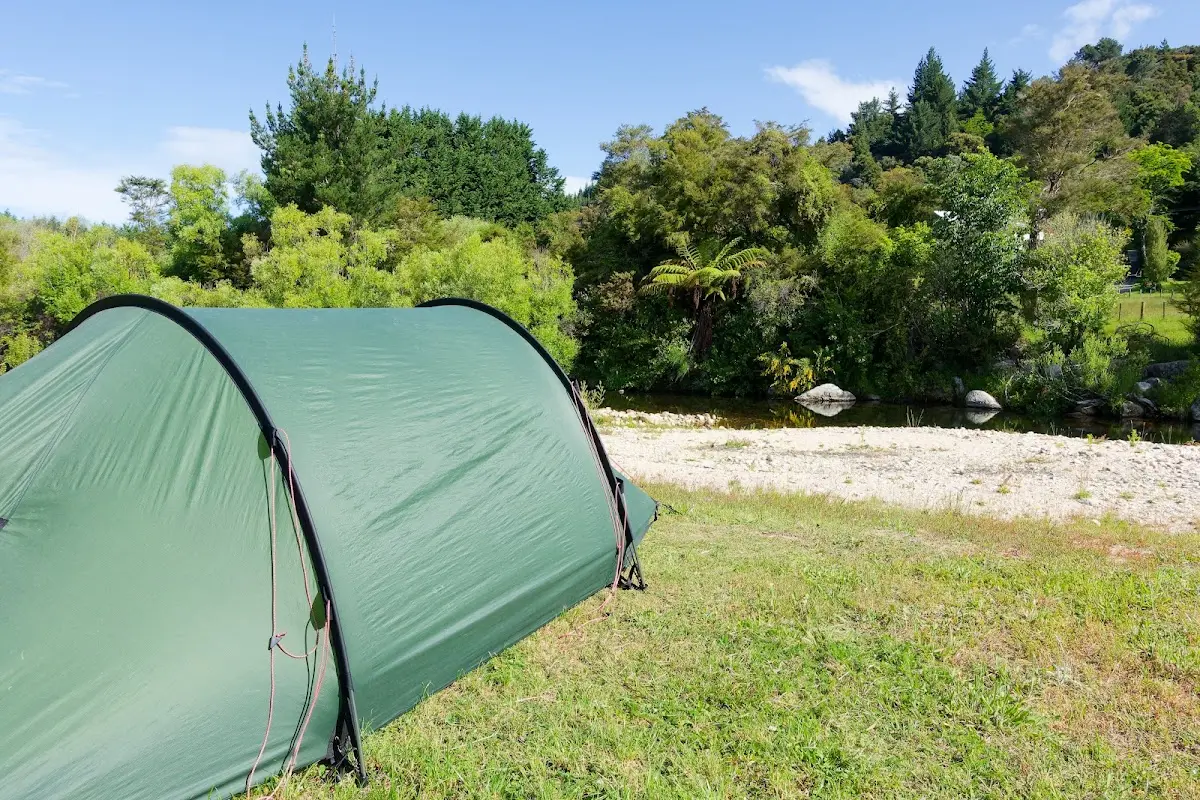
Tent pitched by the creek at Old MacDonald's Farm — bike locked safely in the shed for the Abel Tasman walk ahead.